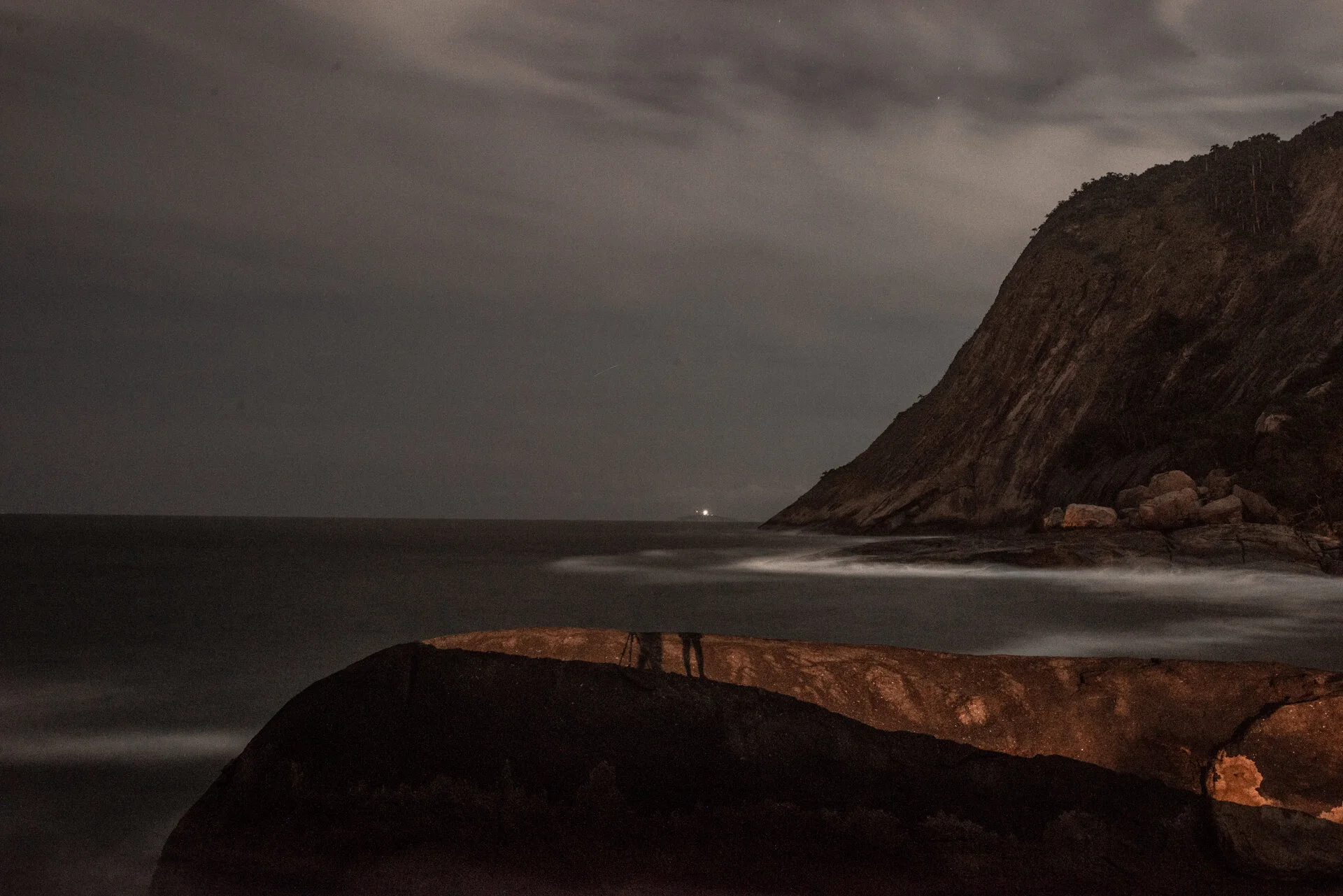
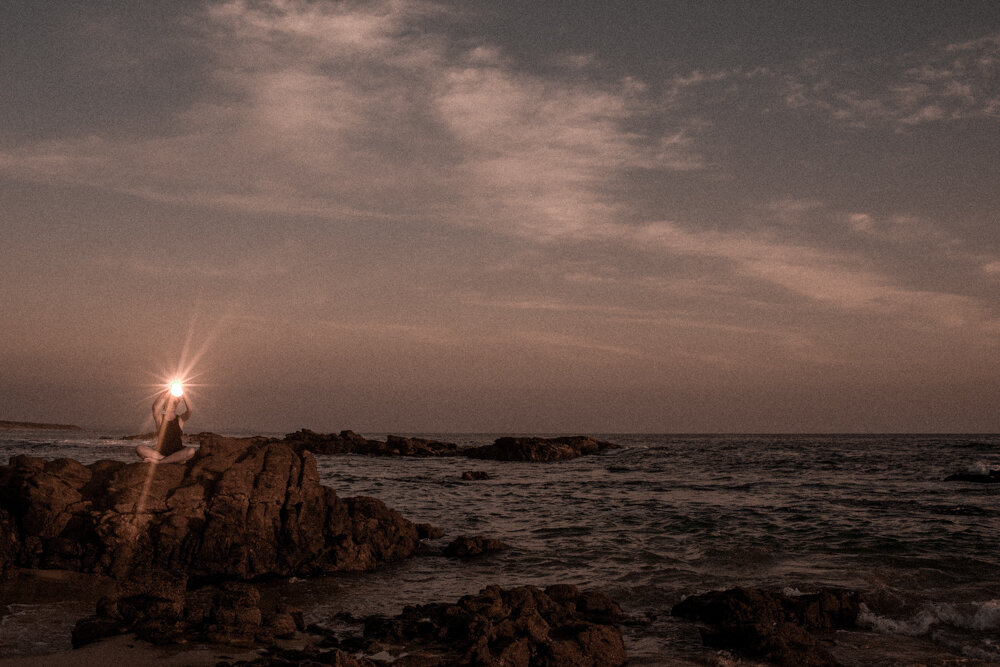
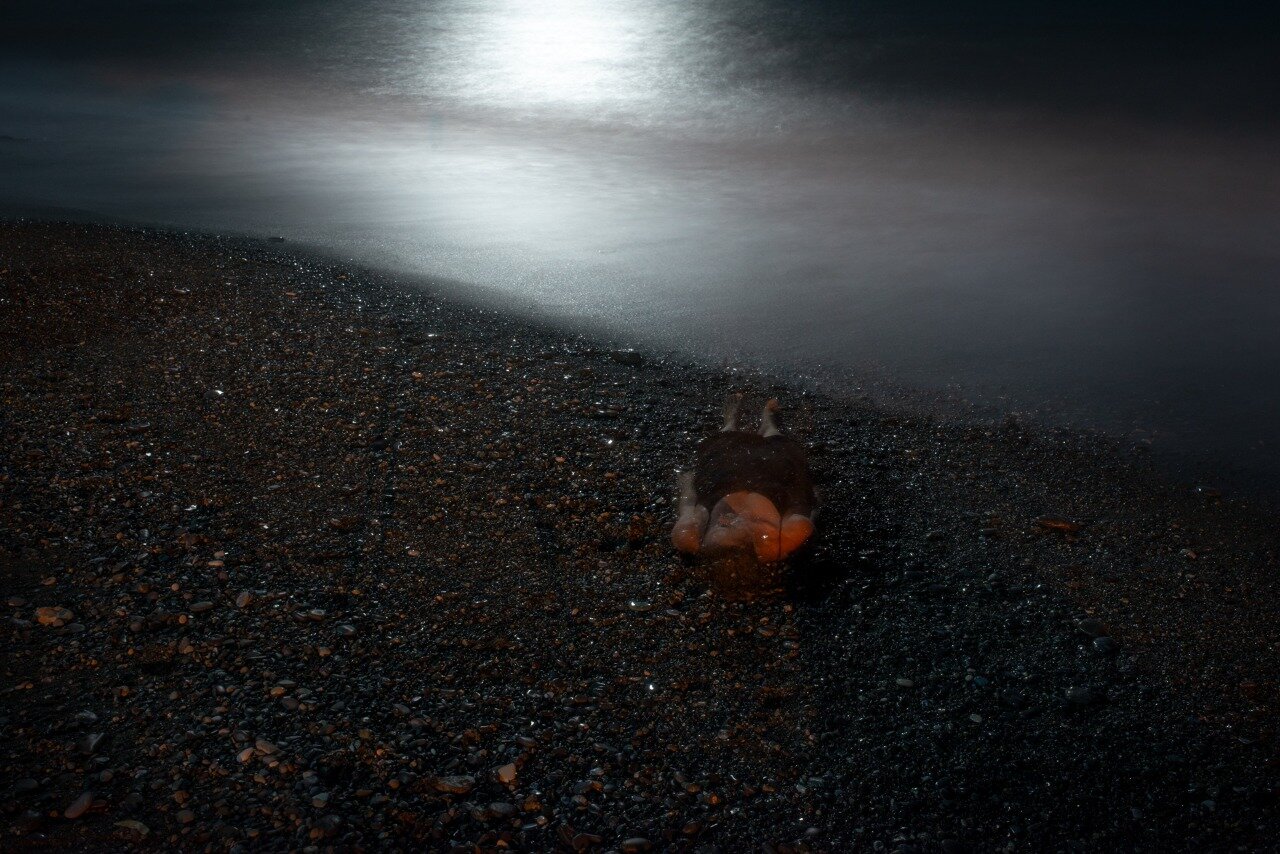
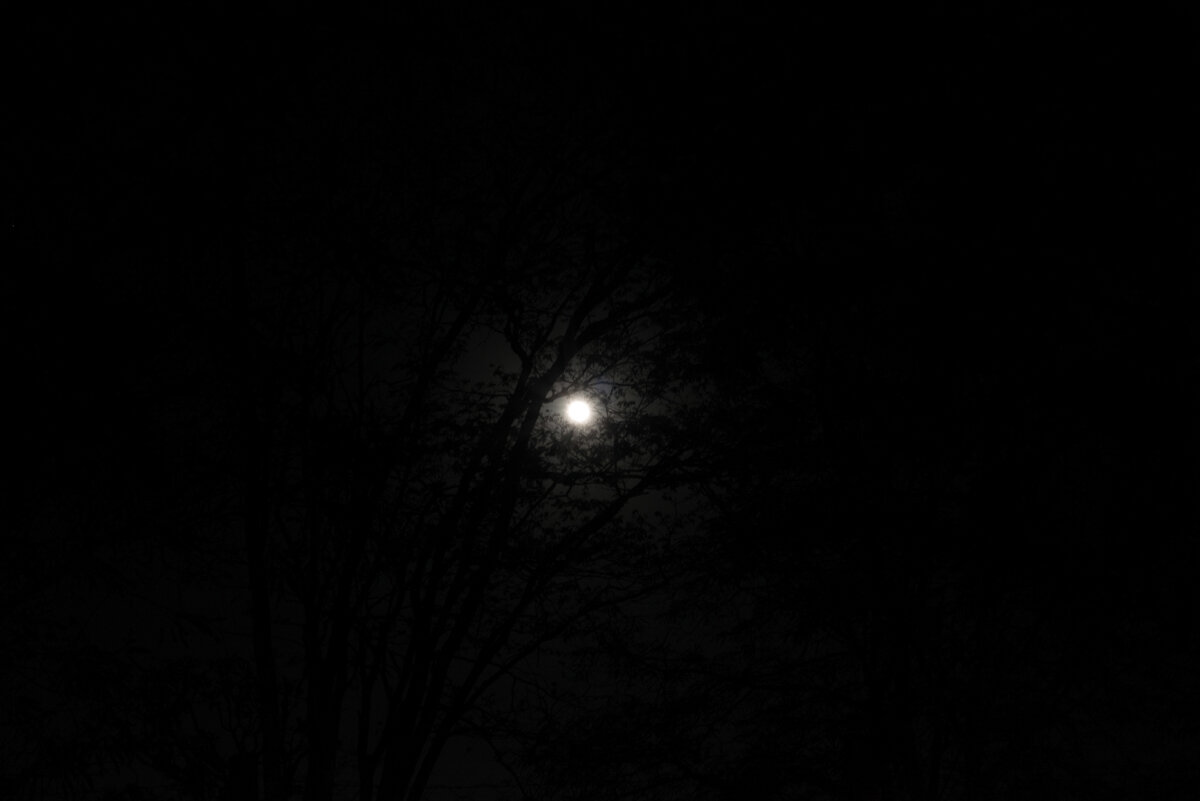
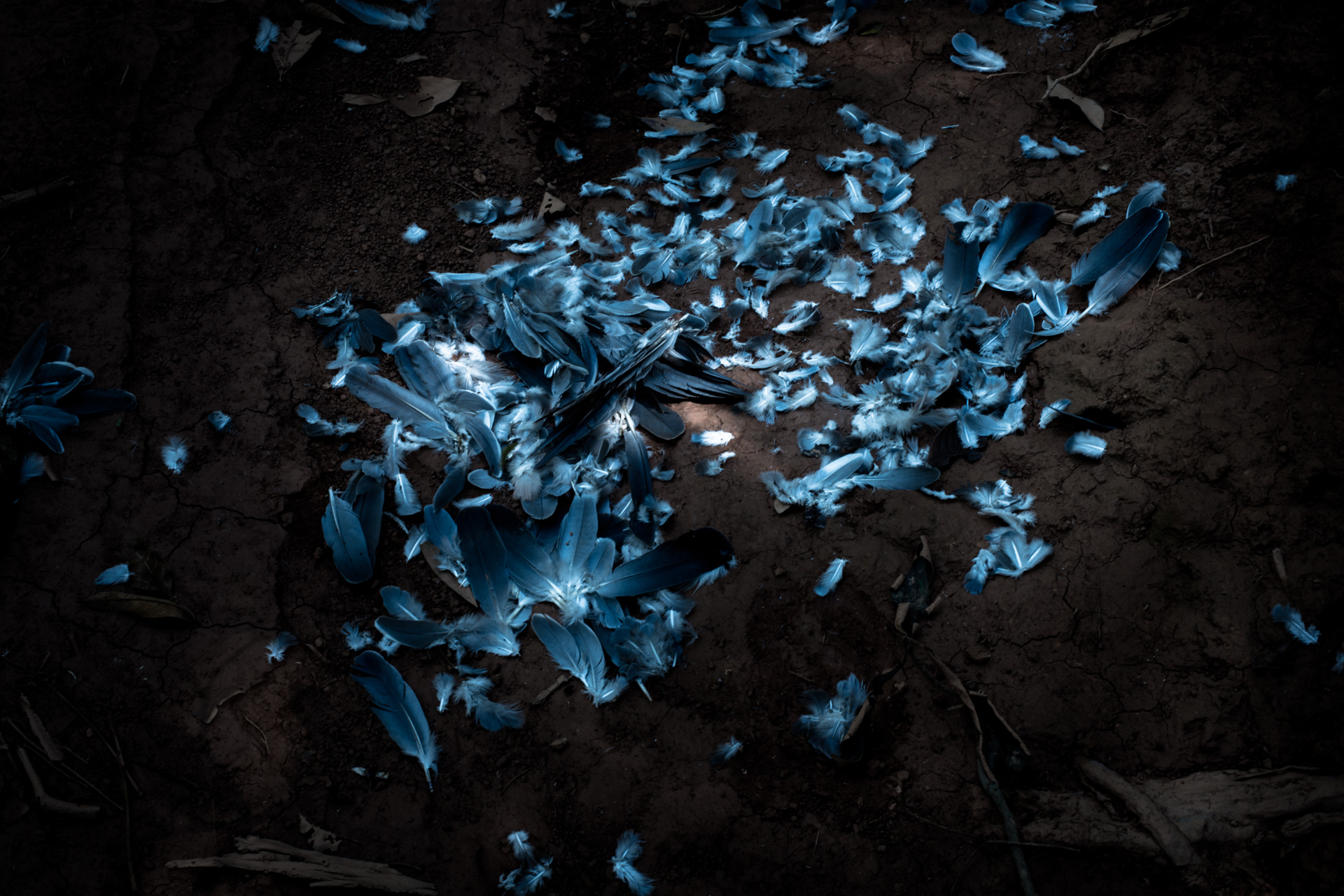
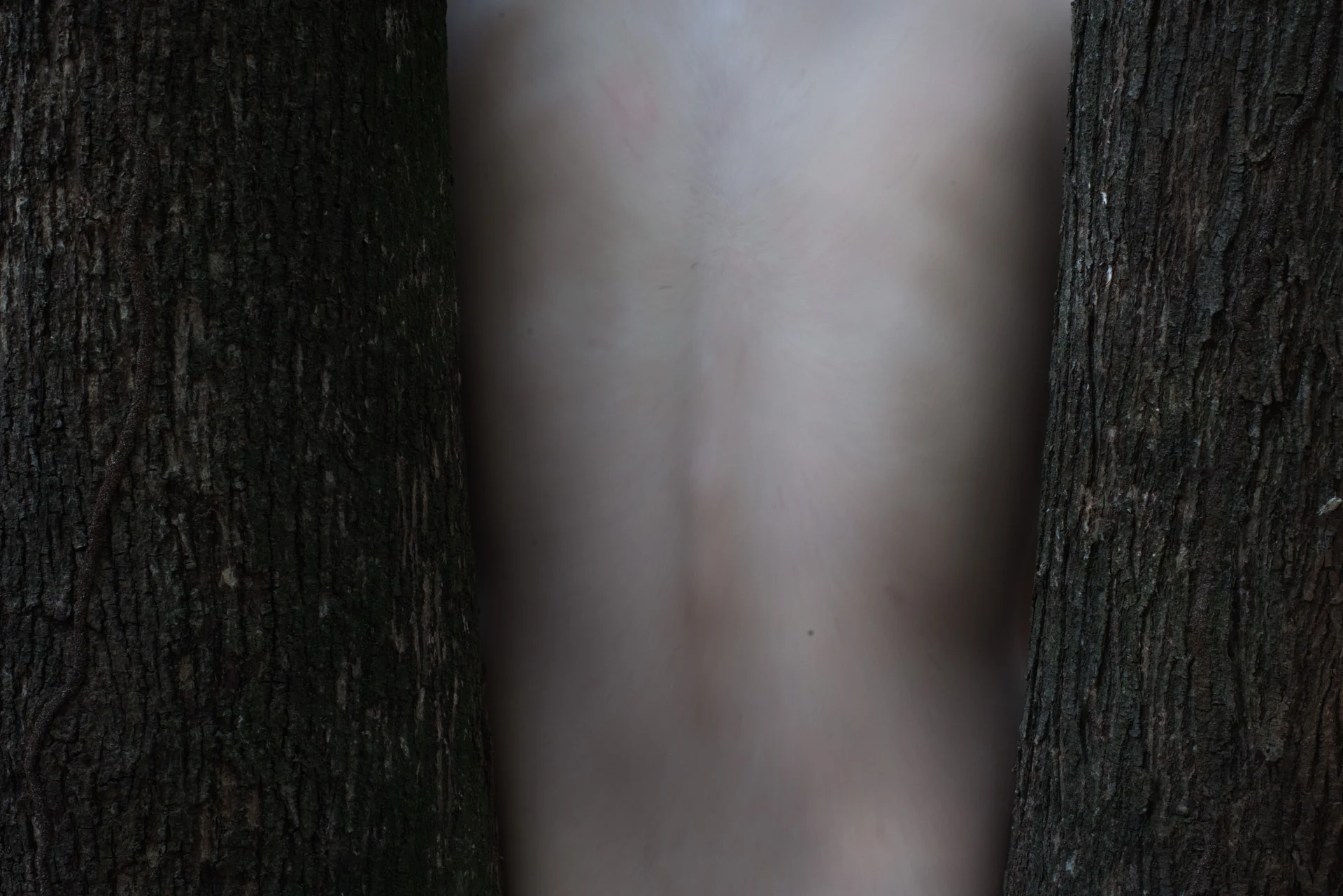
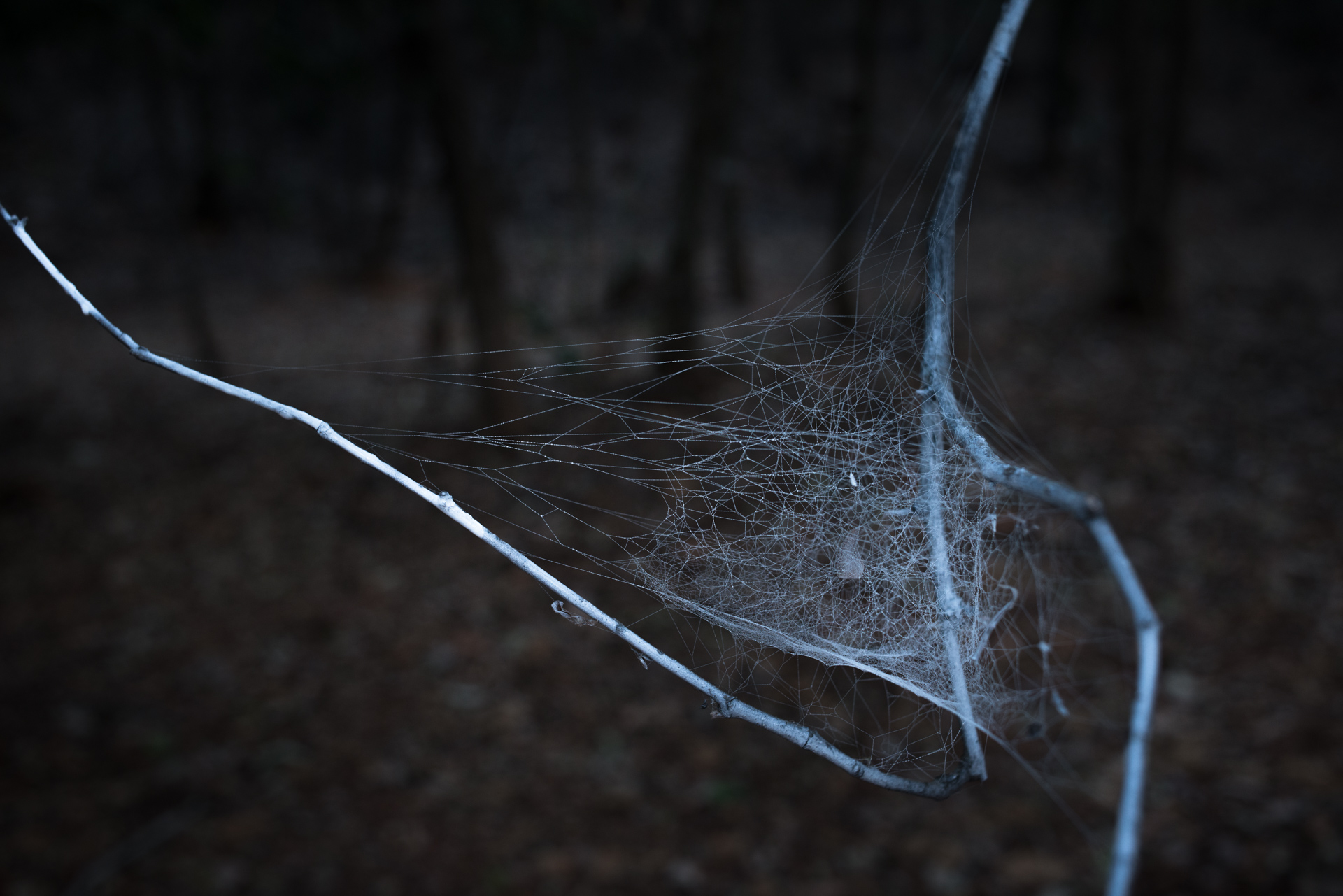
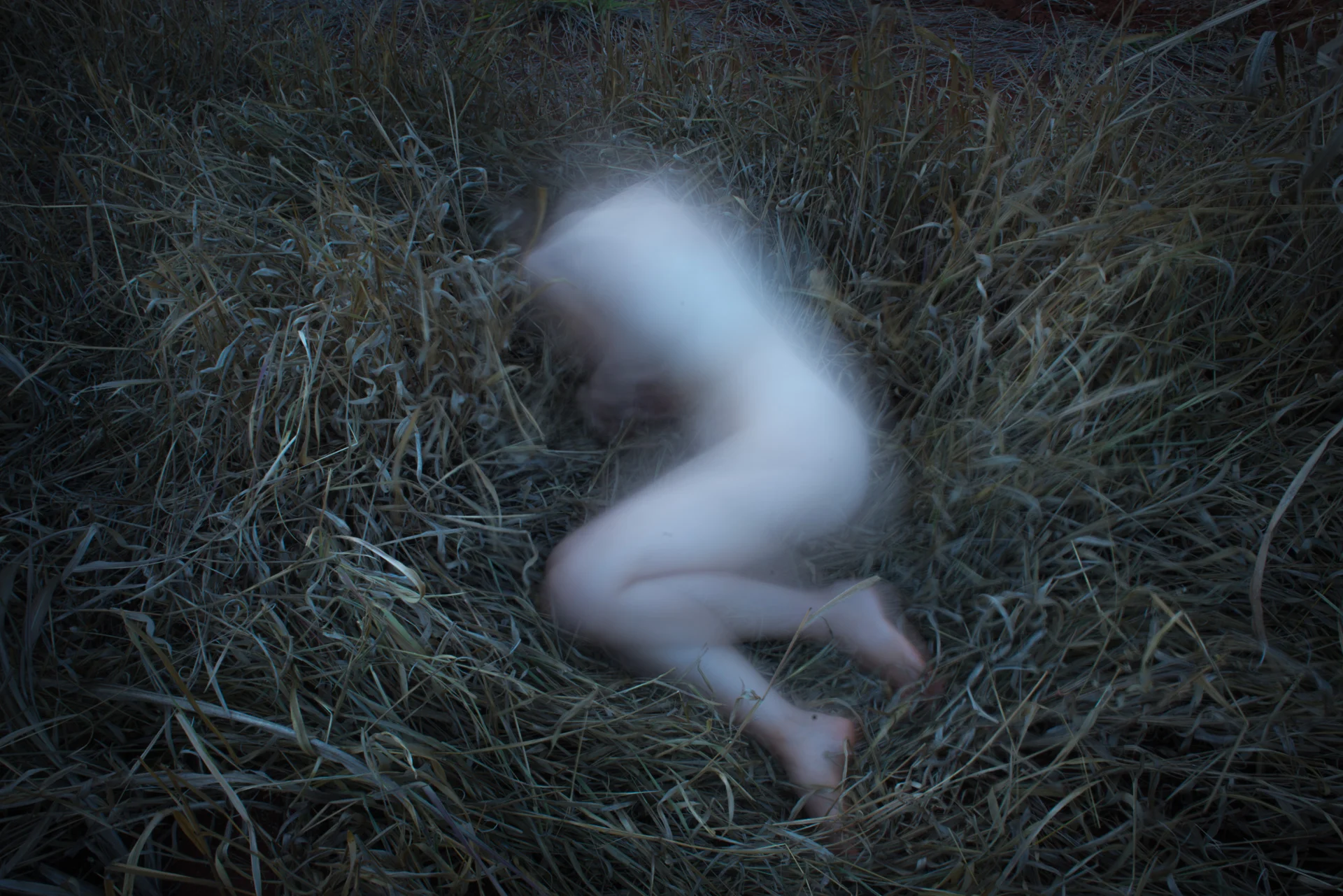
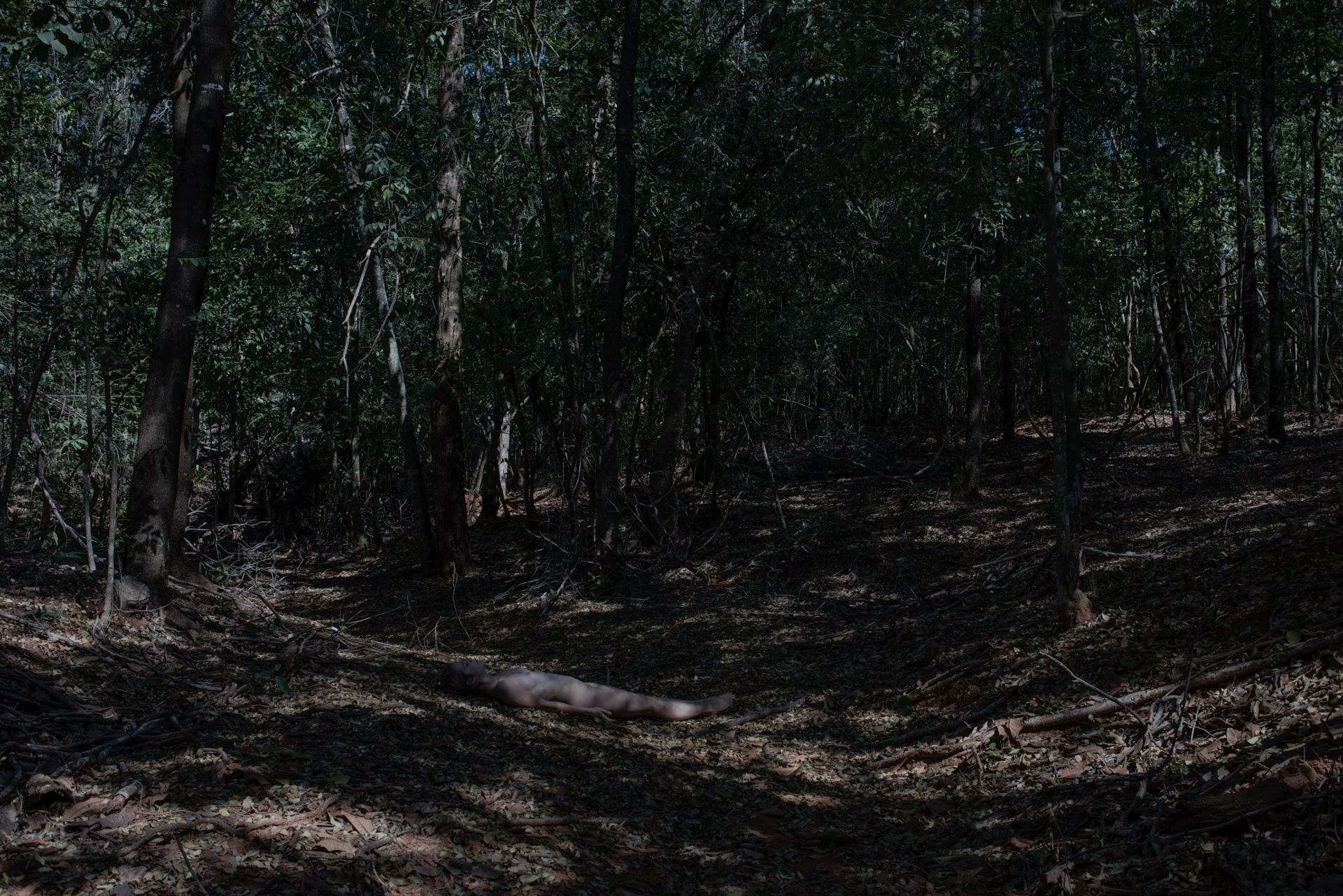
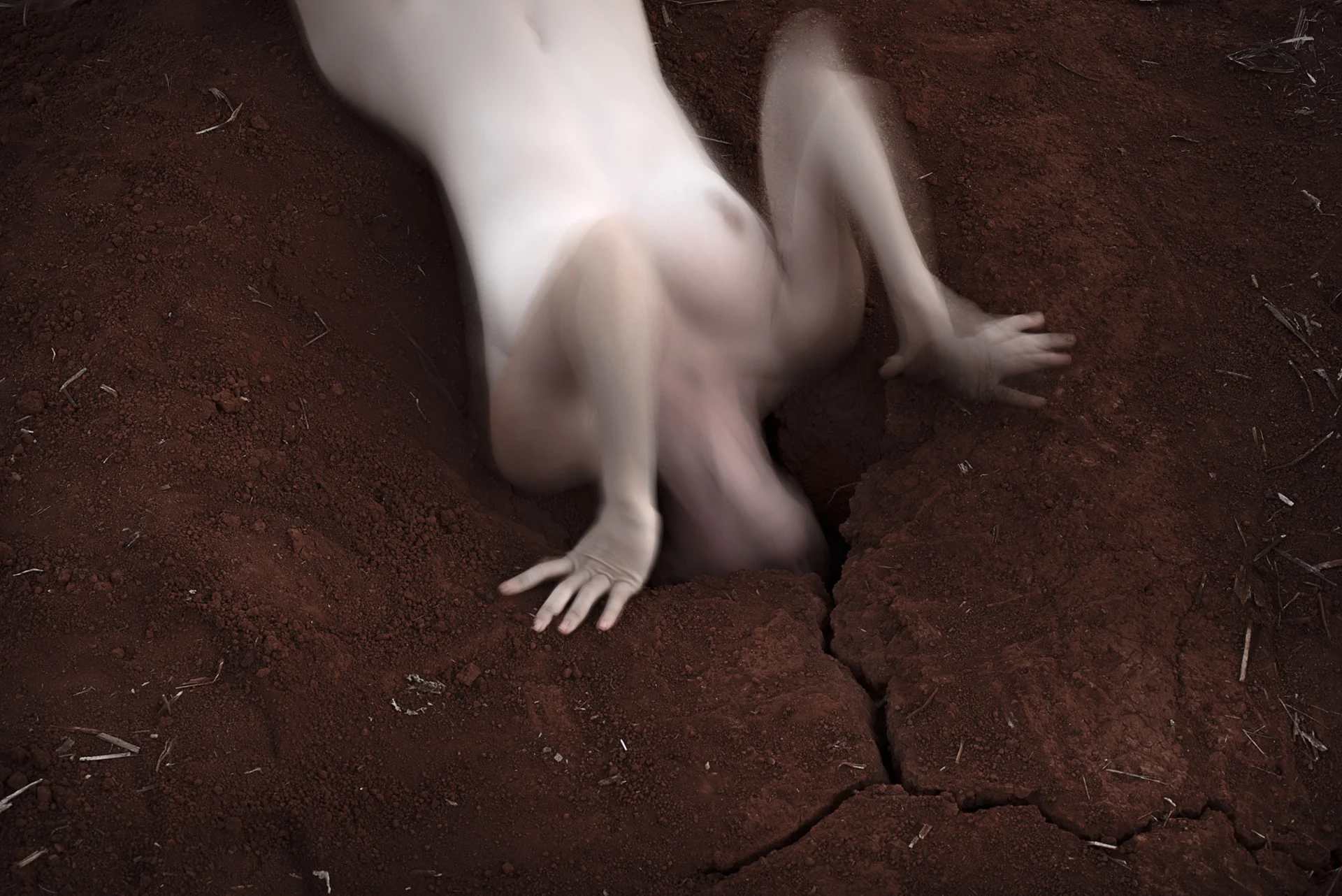
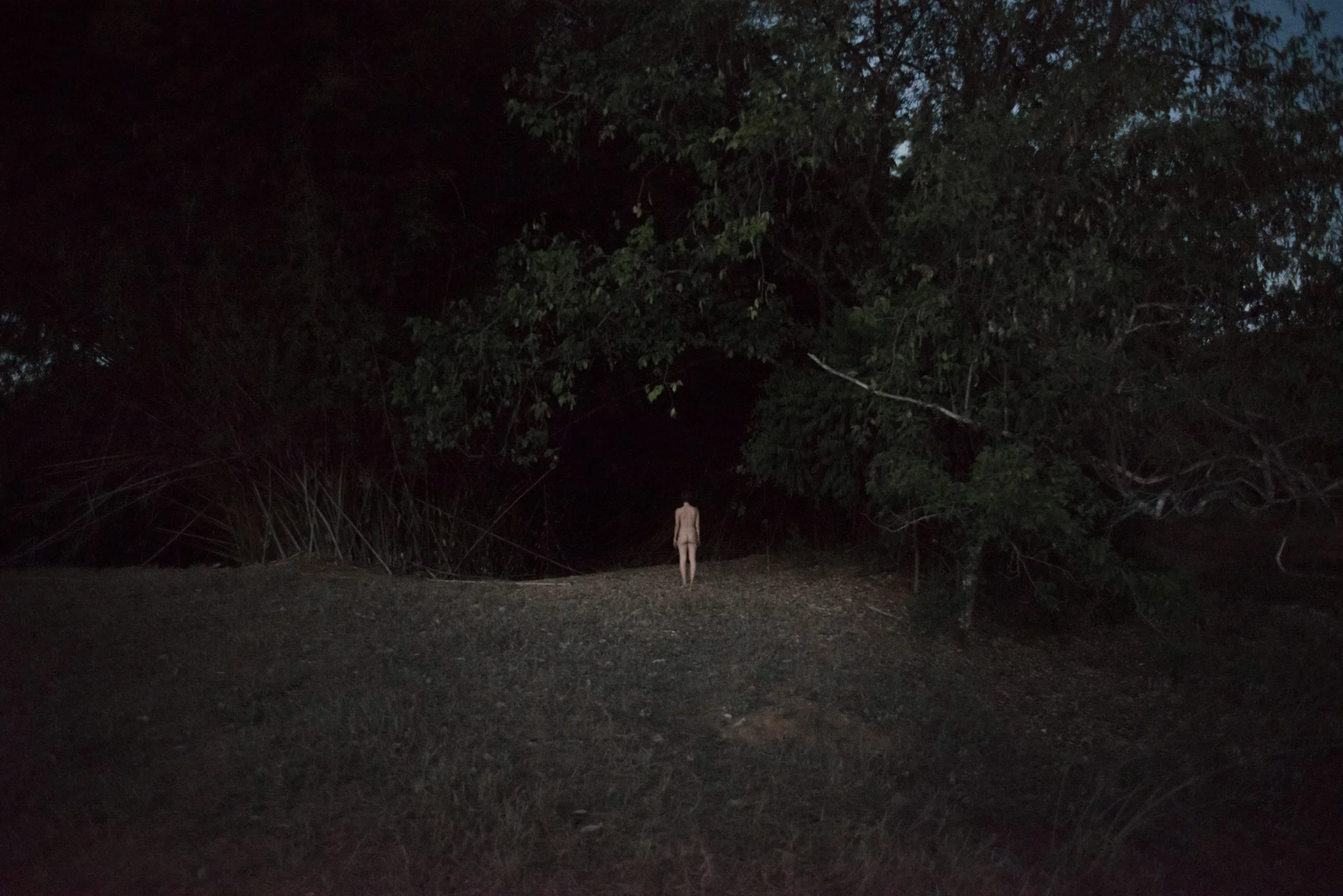
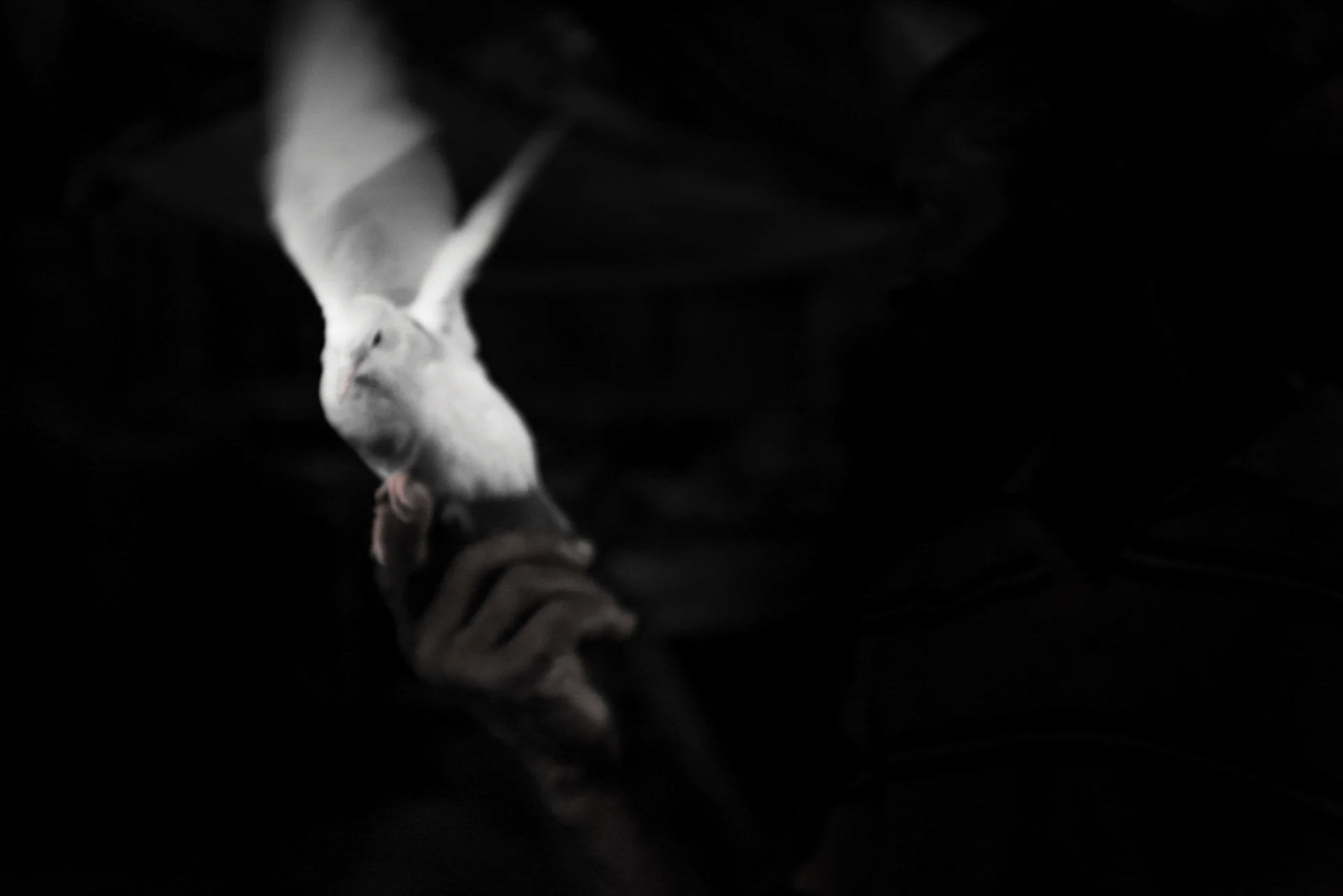
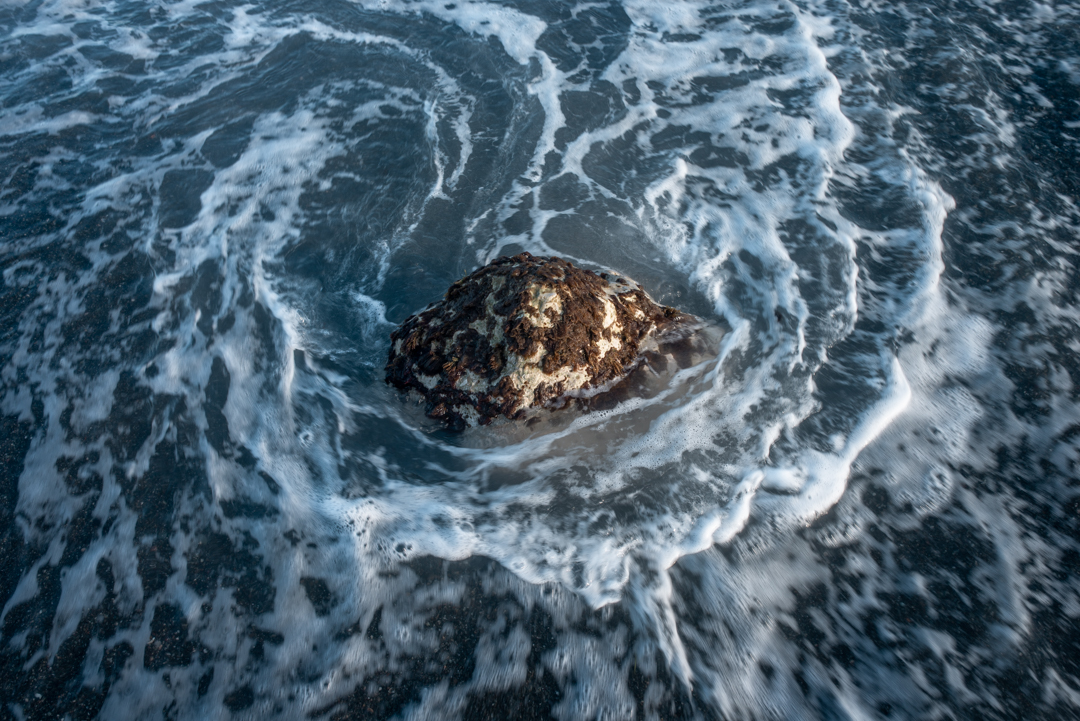
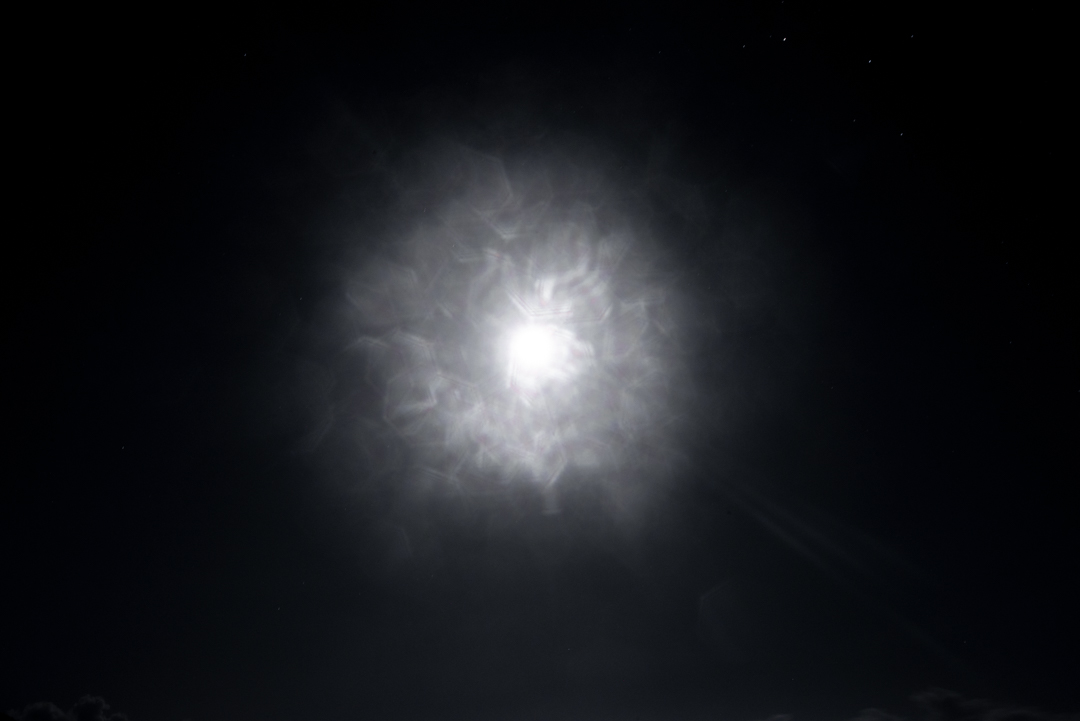
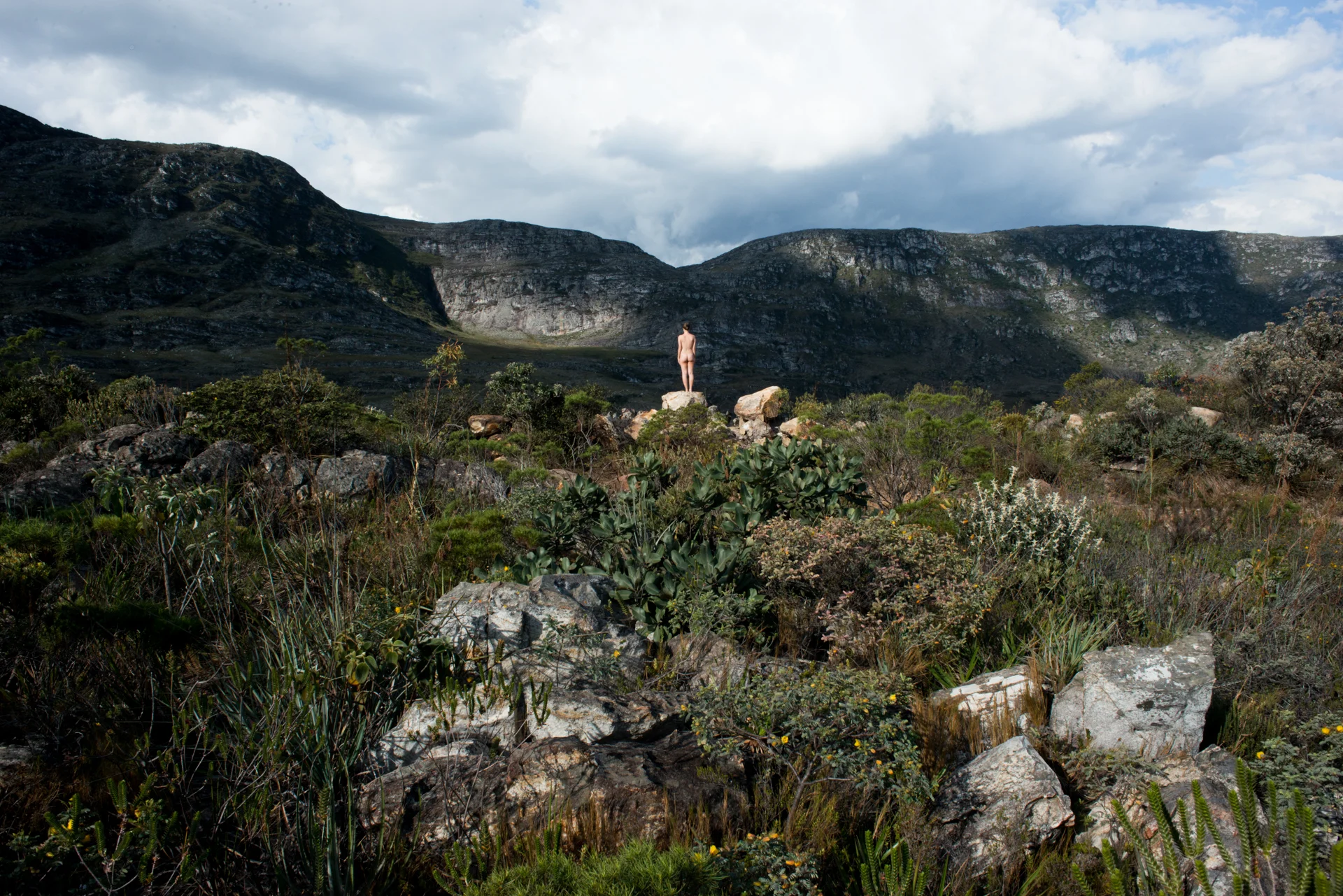
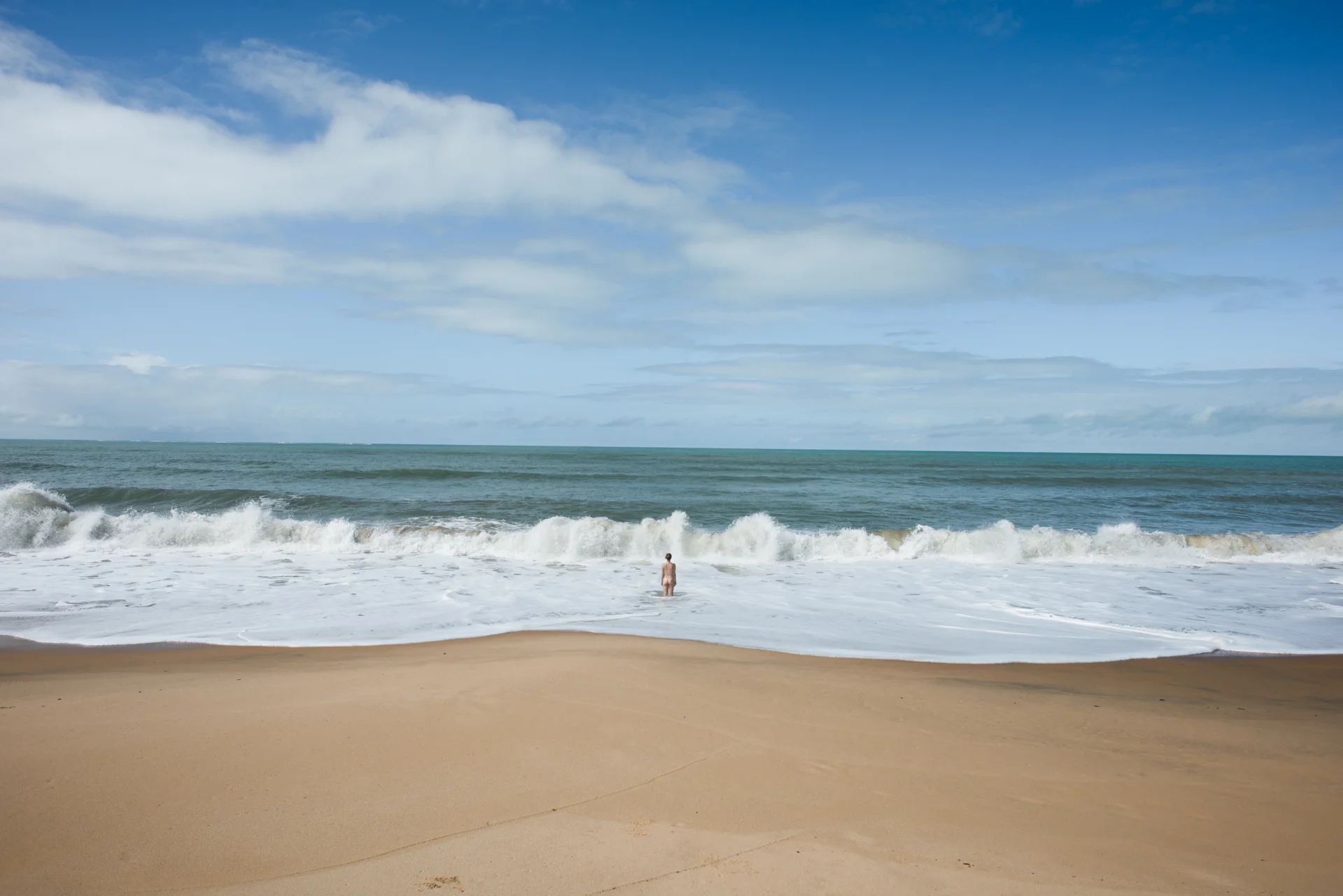
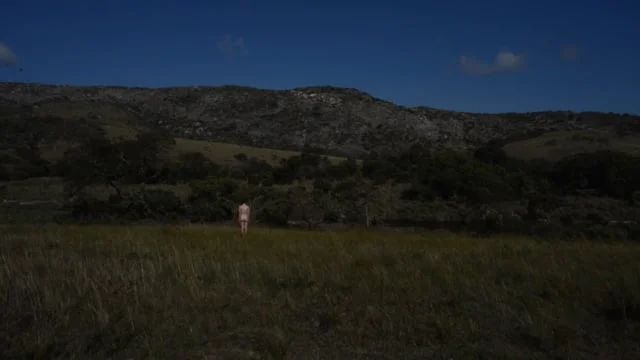
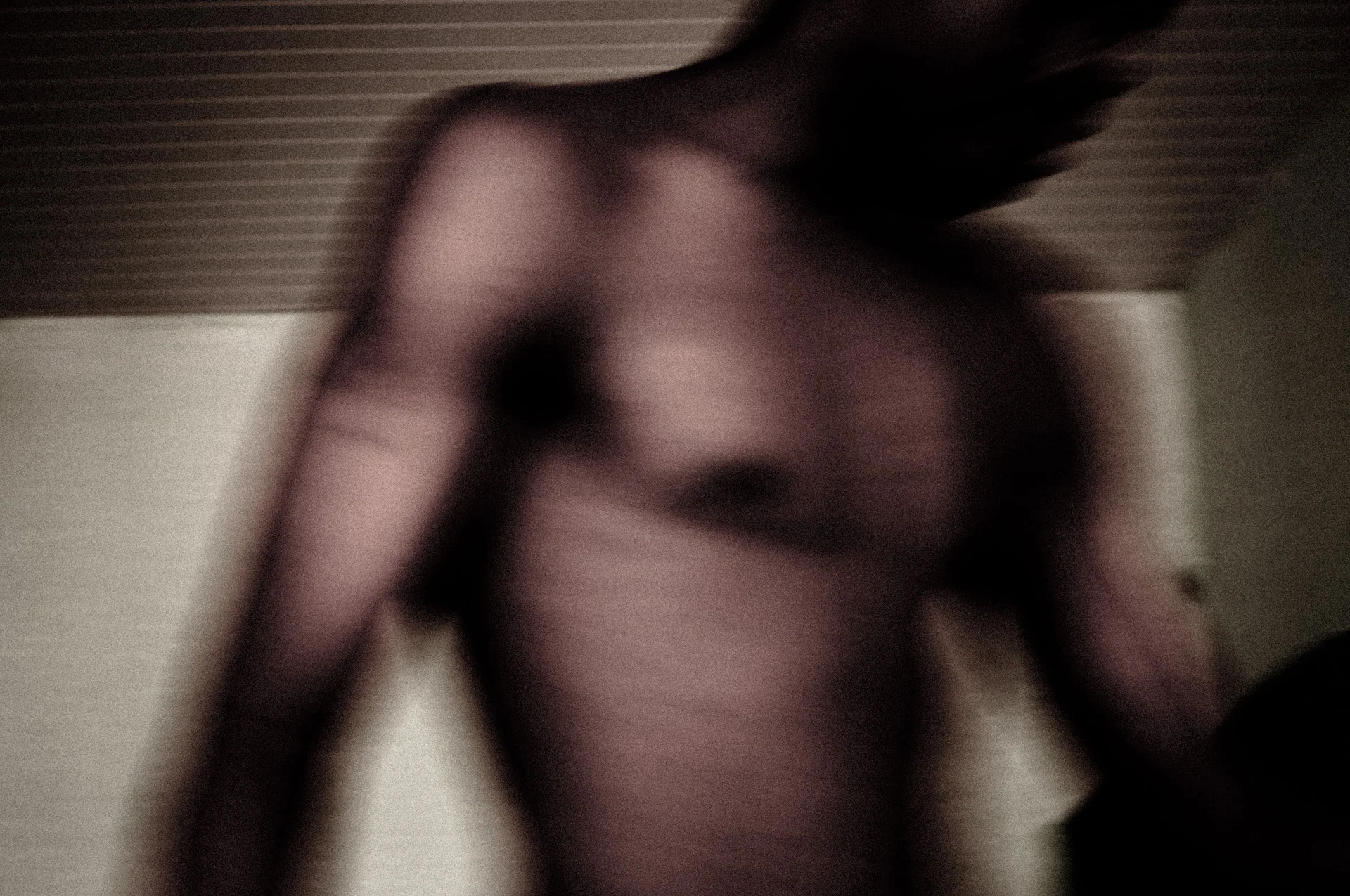
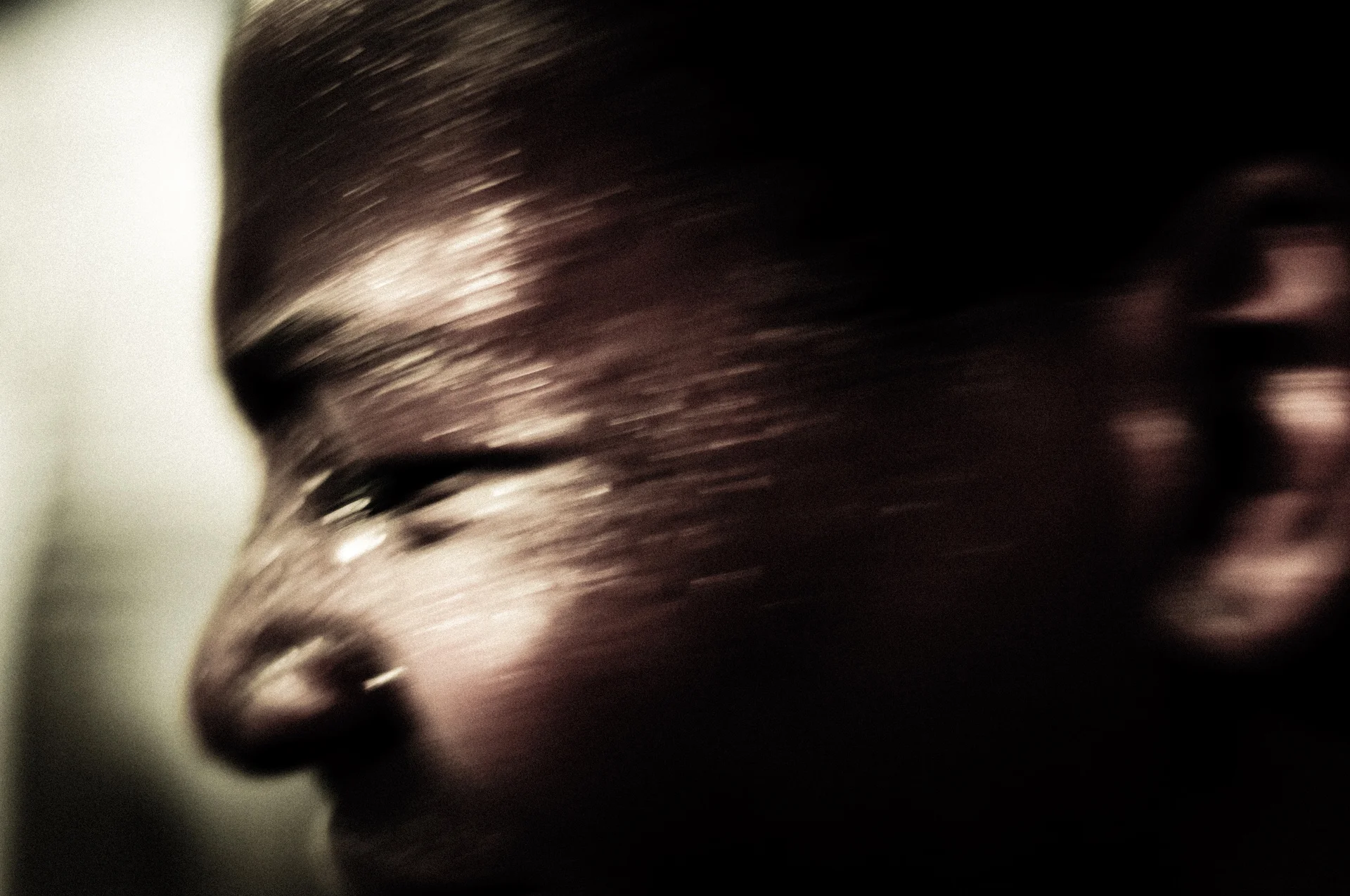
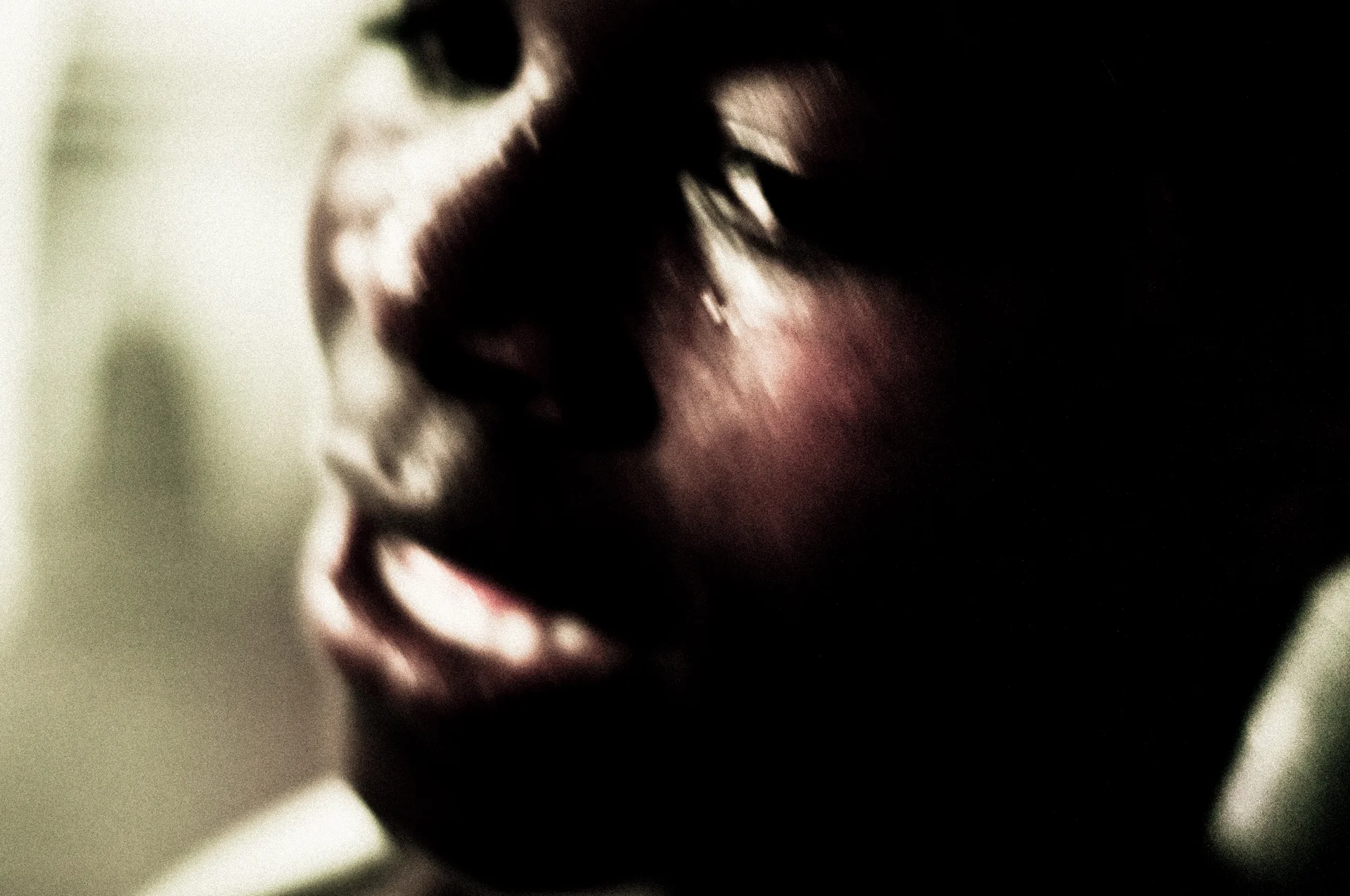
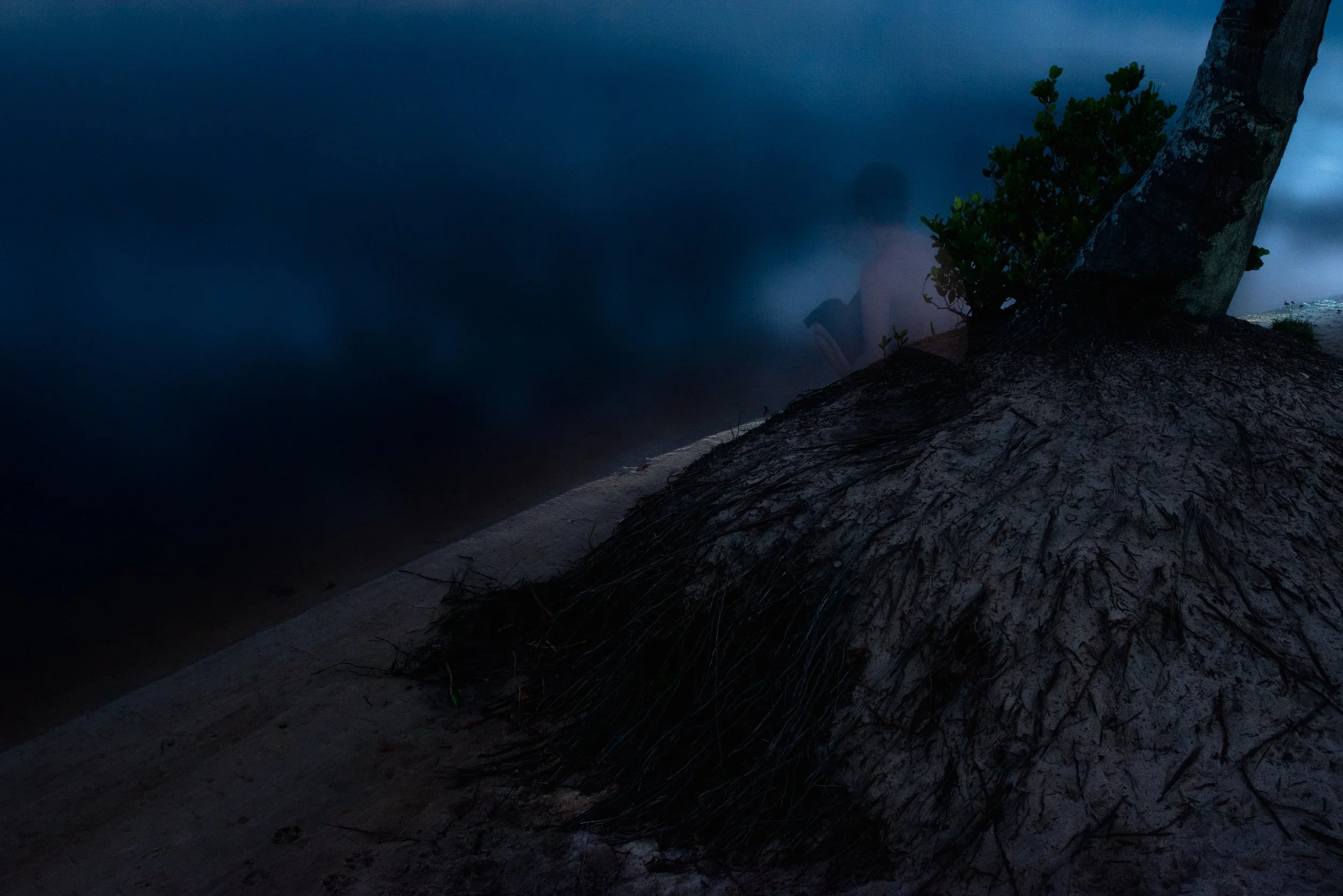
A série fotográfica "Escavar o escuro" foi desenvolvida em três litorais distintos, Imbassaí (Bahia), Itacoatiara (RJ) e Agua Blanca (Oaxaca, México) entre 2018 e 2020. Seguindo uma narrativa fantástica e operando a partir de uma dupla posição – a de estar atrás e na frente da câmera ao mesmo tempo – incursiono no breu da noite propondo dissoluções imaginárias do meu corpo no espaço, em relações de mímesis com a paisagem.
O ato fotográfico se dá a partir de uma dupla cegueira. Não ver pelo gesto de tornar-se objeto da própria captura, dar-se a câmera como imagem, perder o controle do olhar através da autoperformance realizada para a câmera. E não ver por uma questão ótica, pela ausência de luz. Fotografar cenas que apenas a câmera é capaz de revelar, que o olho não alcança. O duplo gesto, de fotografar e de performatizar, é concebido a partir da imaginação e dos sentidos, uma vez que a paisagem só é revelada após o clique. Por outro lado o trabalho se dá como uma expedição pela noite movida pela intenção de captura dos últimos resquícios de luz e brilho, que é conduzida por pequenas descobertas e intervenções com objetos de qualidade brilhante que guardam semelhança com o os astros e as luzes noturnas.
Digging the dark
The photographic series Escavar o escuro was developed across three distinct coastlines—Imbassaí (Bahia, Brazil), Itacoatiara (Rio de Janeiro, Brazil), and Agua Blanca (Oaxaca, Mexico)—between 2018 and 2020. Following a fantastical narrative and operating from a dual position—that of being both behind and in front of the camera at the same time—I venture into the darkness of night, proposing imaginary dissolutions of my body into space, through relationships of mimesis with the landscape.
The photographic act emerges from a double blindness. The first is the inability to see produced by becoming the object of one’s own capture: offering oneself to the camera as an image, relinquishing control over the gaze through the self-performance enacted for the camera. The second is an optical condition, caused by the absence of light. I photograph scenes that only the camera is capable of revealing, beyond the reach of the eye. This double gesture of photographing and performing is conceived through imagination and the senses, since the landscape is only revealed after the shutter is released.
At the same time, the work unfolds as an expedition through the night, driven by the intention of capturing the last remnants of light and brightness. This journey is guided by small discoveries and interventions involving objects with reflective, luminous qualities that evoke the stars and the lights of the night.
Em Exílio é estabelecida uma relação entre fotografia e autoperformance, em que o corpo atua exclusivamente para a câmera, distante do olhar direto do público. A encenação se presta à narrativa fotográfica, já parte da lógica bidimensional, do tempo estático e mudo. Fotografar sem ver a cena: é uma imagem da ordem do antes (imagem-projeção) e do depois (imagem ao acaso). Na formação da fotografia, o sensor da câmera é invadido pela luz, sem a direção de um olho ela surge de um instante anônimo, na abstenção do sujeito. Não há caça, não há um ver-decisivo. É como um tiro ao contrário. Não é a câmera que vai de encontro ao objeto, mas um corpo que se atira sobre o disparo, corpo-projétil.
EXILE
In Exilio's images a relation is established between photography and autoperformance, in which the body (of the artist) acts exclusively for the camera, away from the public gaze. To photograph without seeing the scene: it is an image of the order of before (image-projection) and of the after (image at random). In the formation of photography, the camera sensor is invaded by light, without the direction of an eye, it arises from a anonymous instant, in the abstention of the subject. It's like a shot backwards. It is not the camera that goes against the object, but a body that throws itself on the shot: body-projectile.
Fotografia digital
2018
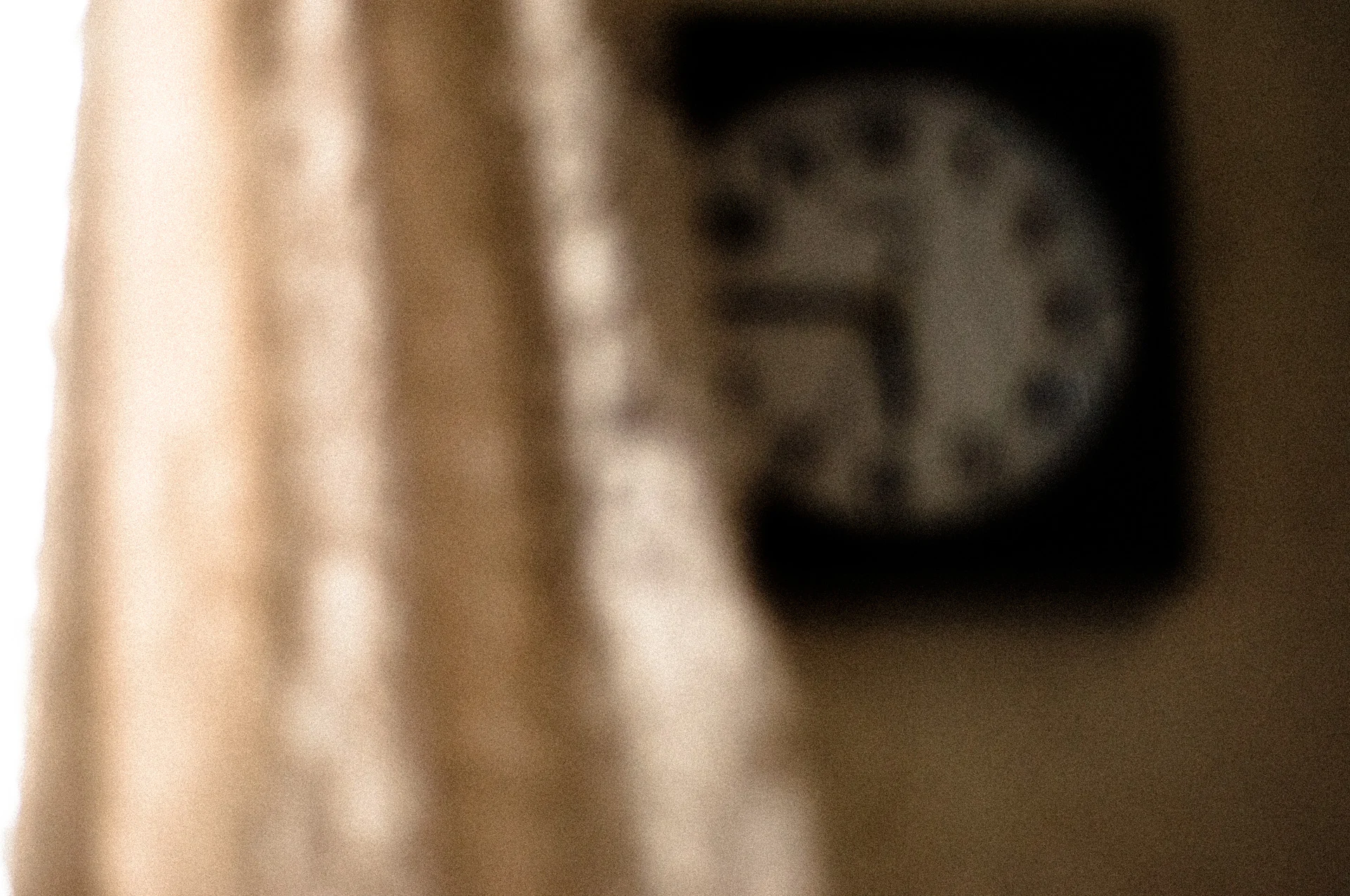
A partir da experiência do meu corpo - deslocado e deslocando-se - na ilha, traçando percursos entre mar-cidade-floresta, fabulo um novo paraíso, tensiona- do já no título pela pergunta que o instaura. A imagem edênica é desconstruída no ensaio pela atmosfera densa, escura e dessaturada, rompendo com os clichês do éden caribenho; contrapõe-se ao paraíso privatizado - imaginado nas Américas - onde desembarcam centenas de turistas por dia em faixas pagas de mar azul turquesa. É nesse percurso pela ilha que crio linhas de experimentação desinvestindo-me de cartografias fixadas de sentido para então fabular um mundo outro.
WHAT TIME IS IN PARADISE?
From the experience of my body - dislocated and moving - on the island, tracing paths between sea-city-forest, I fame a new paradise, already stressed in the title by the question that establishes it. The edenic image is deconstructed in the assay by the dense, dark, and desaturated atmosphere, breaking with the clichés of Caribbean Eden; contrasts with the privatized paradise - imagined in the Americas - where hundreds of tourists per day are paid in pairs of turquoise blue sea. It is in this journey through the island that I create lines of experimentation, divesting myself of fixed knwoledge and then fable another world.
Das formas de desenterrar o céu é uma microperformance feita para a fotografia, na qual é produzida uma intervenção com espelhos na paisagem, fabulando uma situação fantástica.
HOW TO UNEARTH THE SKY
This is a microperformance made for photography, in which an intervention with mirrors is produced in the landscape, making a fantastic situation.
Em Estâncias, o corpo vai ao encontro do fora. Desloca-se até encontrar o ponto ideal que conduz à imagem. Ele caminha só, como quem parte em êxodo, quem parte em direção ao infinito. Instala-se no espaço para produzir potências e habitar o ilocalizável: um cupim solitário, um lago seco, a entrada de um abismo qualquer, um pedaço de terra, um rastro animal, um deserto, uma pedra, uma onda. Associa-se ao todo sem se desfazer de sua estrutura orgânica. É invadido pela imensidão e lhe dá a sua medida. Habita o espaço com suas intensidades definindo uma nova paisagem, relativizando-a.
ESTÂNCIAS
In Estancias, the body walks towards the unknown infinity. She walks alone, as one who leaves in exodus. She installs itself in space and inhabit the unoccupable: a solitary termite, a dry lake, the entrance of any abyss, a piece of land, an animal trail, a desert, a stone, a wave. She associates herself with the landscape. She is invaded by the immensity and gives it its measure. defining a new landscape, relativizing it.
A obra é constituída de uma série de vídeos consecutivos. Em cada um deles acontece uma microperformance, em que o corpo é acionado por forças externas da natureza que o tocam em seus deslocamentos. O corpo aqui torna-se matéria-prima da própria experiência e se deixa afetar, praticando o abalo de si, o perder-se e a potência de uma auto-invenção. Nele reverberam o vento, a luz, a temperatura e a vertigem que essas grandezas provocam.
2016, 7'08", 16x9
CATCHER FOR IMPAPABLE GREATNESS
The work consists of a series of consecutive videos. In each of them happens a microperformance, in which the body is activated by external forces of nature that touch it in its displacements. The body here becomes the raw material of the experience itself and is allowed to affect, practicing the the loss of self and the power of self-invention. In it reverberate the wind, the light, the temperature and the vertigo that these magnitudes cause.
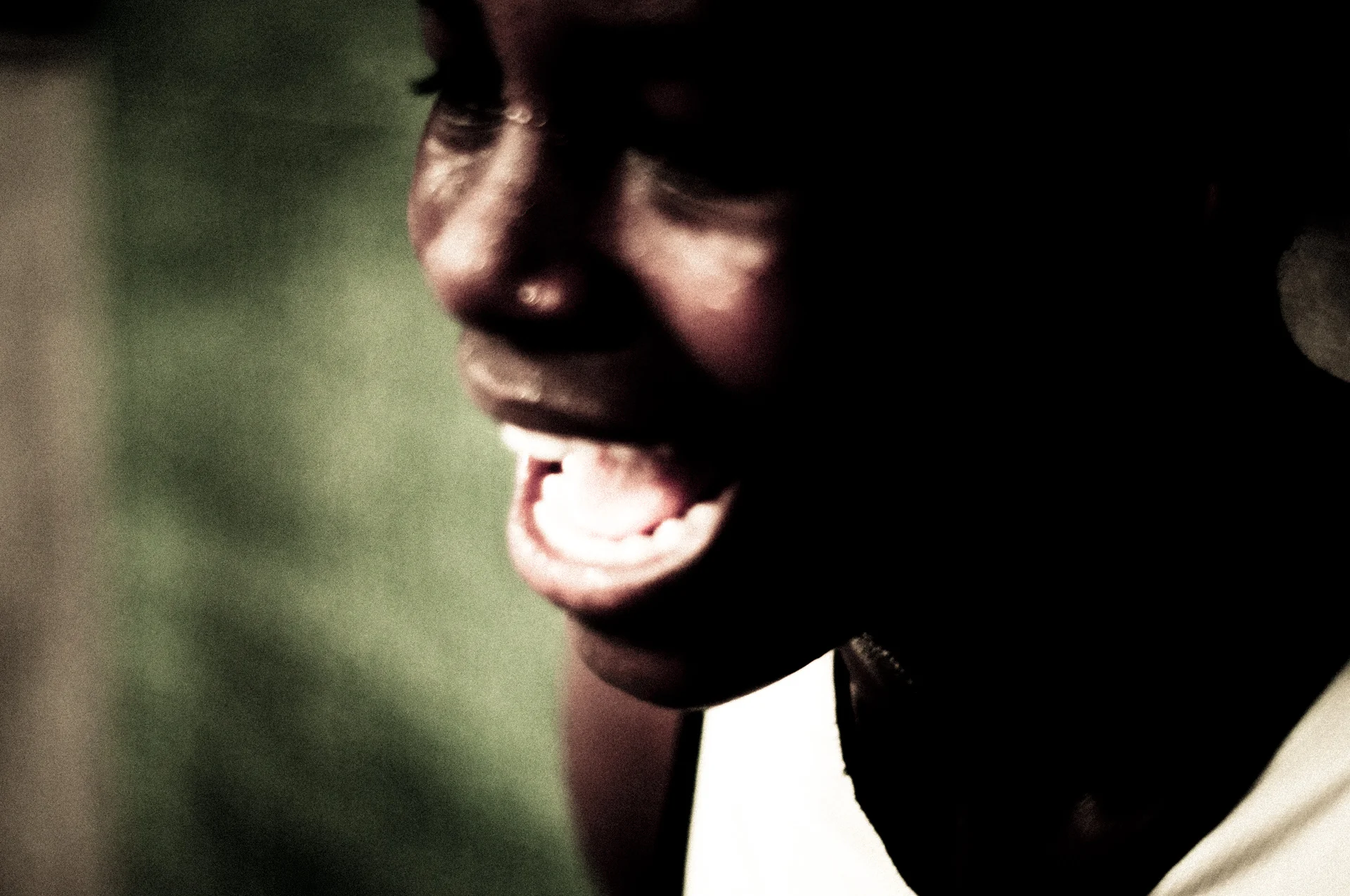
Canito é um ensaio resultante de um encontro. Da crença de que cada ser se revela apenas pela luz que emana. É descrição poética de uma experiência sensível. Um trabalho que relaciona corpo, vibração, experiência e transe. Um personagem que nasce da fusão de duas subjetividades, da história que teimava se inventar entre nós. A imagem cumpre seu papel, e ocupa o silêncio do momento em que as palavras desaparecem. Fotografei o que não podia dizer. Os momentos em que Canito se dissolvia aos meus olhos e se tornava vibração. Canito não tem limites, ele transborda em sua performance, encarna uma presença em potência total, um ser completo em transcendência.
CANITO
Canito is a work resulting from a meeting. It is a poetic description of a sense experience. A work that relates body vibration, and trance experience.
Canito is a character born from the merging of two subjectivities. The images fulfills its role, and occupies the silence of the moment when the words disappear. I photographed what I could not say.
Canito has no limits, he overflows into his performance, embodies a presence at full power. His scream is a protest, is a purely visual sound that echoes and hurts forever beholder.
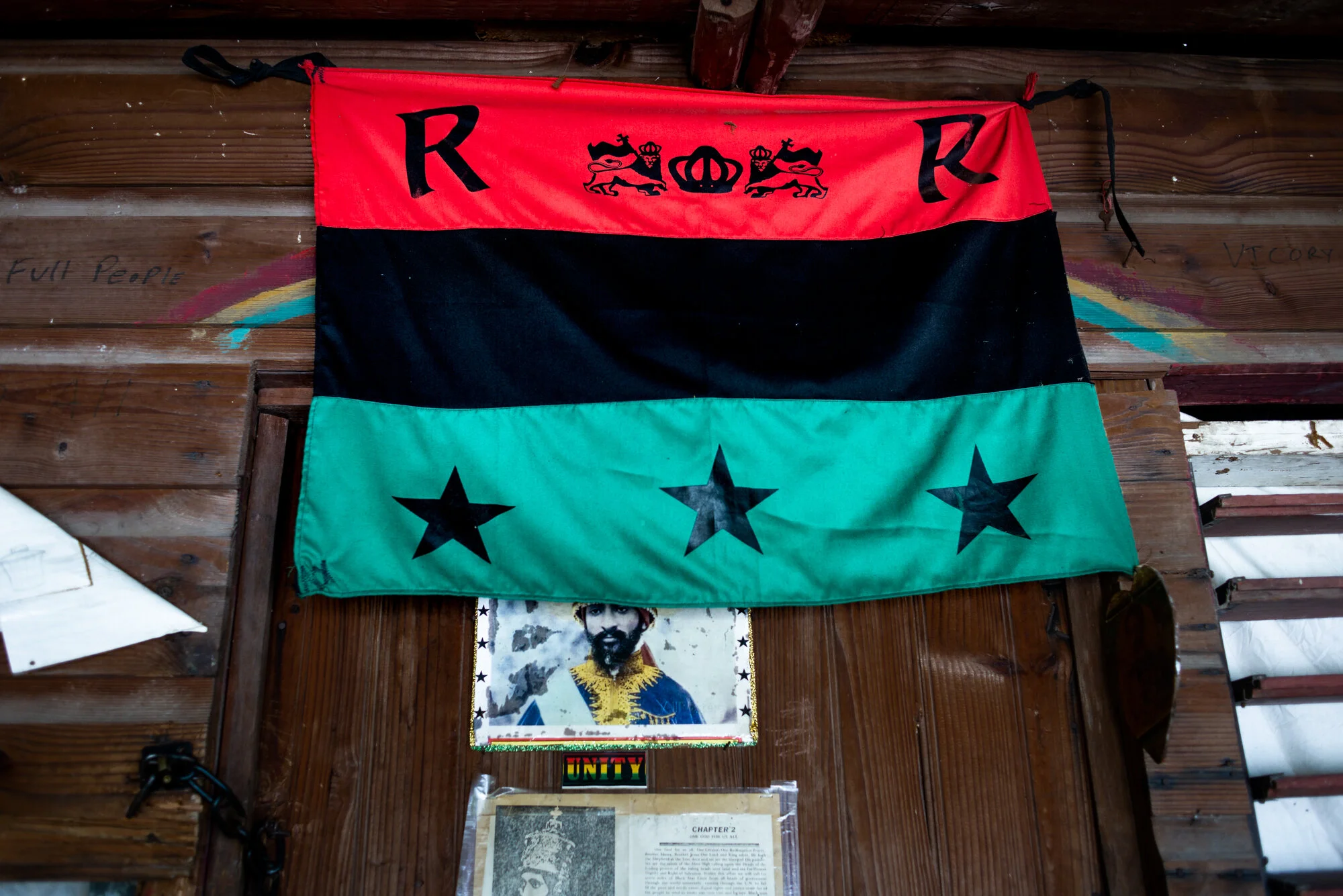
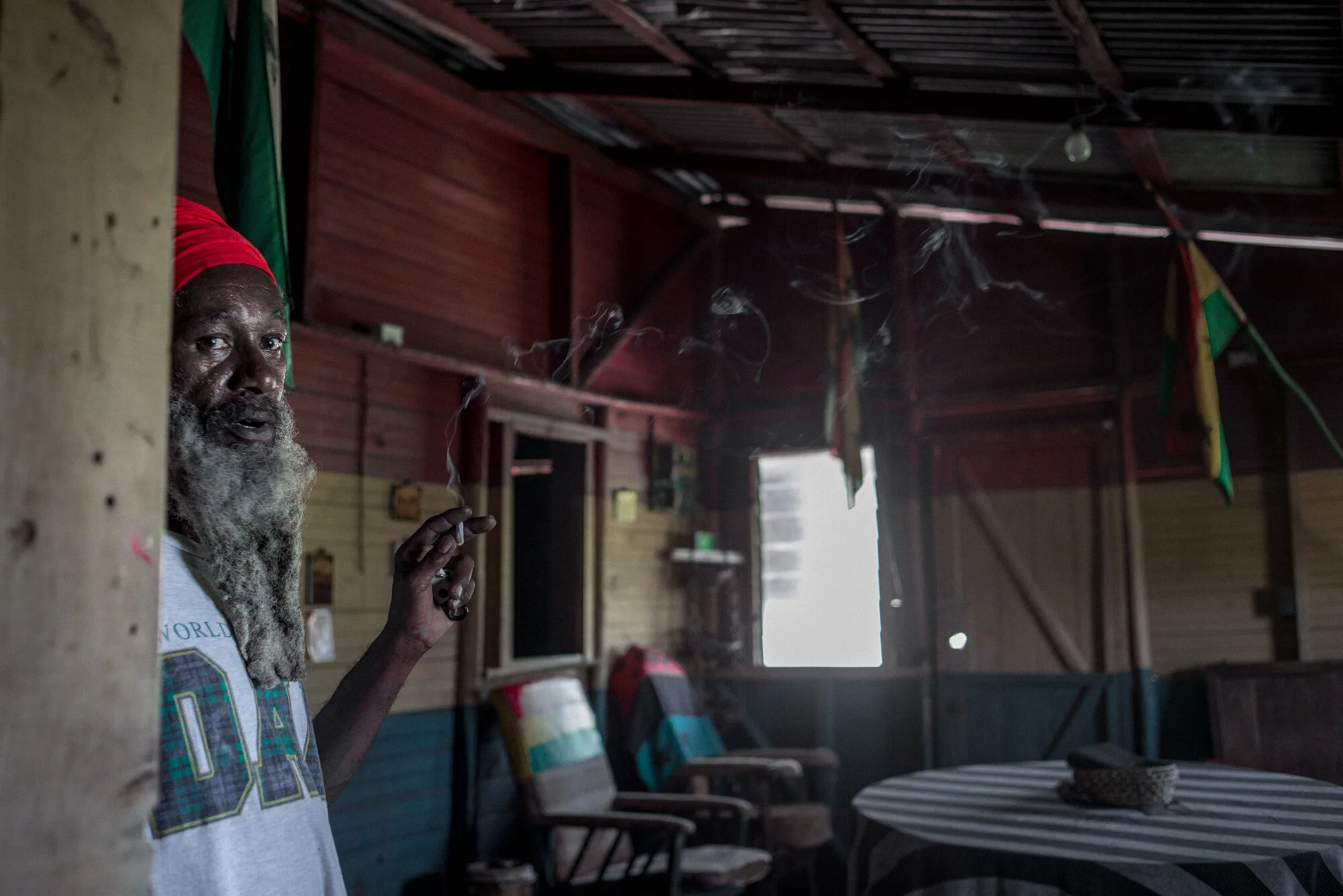
Looking forward to seeing Jamaican Island's most important Rastafarian camp of the Bobo Shanti order, I head to the front door, enter the reception and reverence Priest Sheppard. We pray together, facing east, towards Africa. I follow the Bobo Shanti brethren (also called Bobos), who make the "trinity" sign with their hand, and then one of the priests corrects me, showing that I should put my left hand over my heart. Each man make his own pray aloud. We follow the prayer and at the end they all say together with a deep voice that vibrates throughout the room: Selassie I Jah Rastafari!
The Bobo Hill community is located in the mountains of Bull Bay, 9 miles from Kingston, Jamaica's capital. Founded in 1978 by the leader Emmanuel Charles Edward (later called King Emmanuel), the community gathers practitioners of the Rastafari movement around a exegesis of the Old Testament and other biblical texts. According to the Bobo Shanti, the story told in the bible about the persecution of the Israelites by the Romans is actually an allegory of the process of slavery suffered by the black population. In this sense, the true messiah is the Black Christ (also called Negus), in the image of his persecuted children.
The main focus of Bobo Shanti cosmology and political organization is repatriation, that is, the return of blacks in diaspora to the African continent. From this agenda the Bobo Shanti demands – from the Jamaican government and from Nation States that played a leading role in the transatlantic slave trade – reparation for the damage suffered by slavery. The Rastafari movement in Jamaica has suffered since its inception in 1930 with the coronation of Tafari Makonen (Haile Selassie I) - harsh persecution by the Jamaican government and colonial authorities who sought to contain their anti-systemic practices and discourses.
Nowadays, Bobo Shanti's main agendas, includes the sacramental use of cannabis, territorial autonomy and self-government, and especially the demands for repatriation and reparation. The Bobo Shanti have already made several requests to Jamaican government agencies and international entities such as the UN to meet their central demand: the process of reparation and repatriation.
The ongoing project proposes to create a space of appearance to this community over which there is scarce visual, documentary or ethnographic material, and is little known outside the Rastafarian practicing circles.
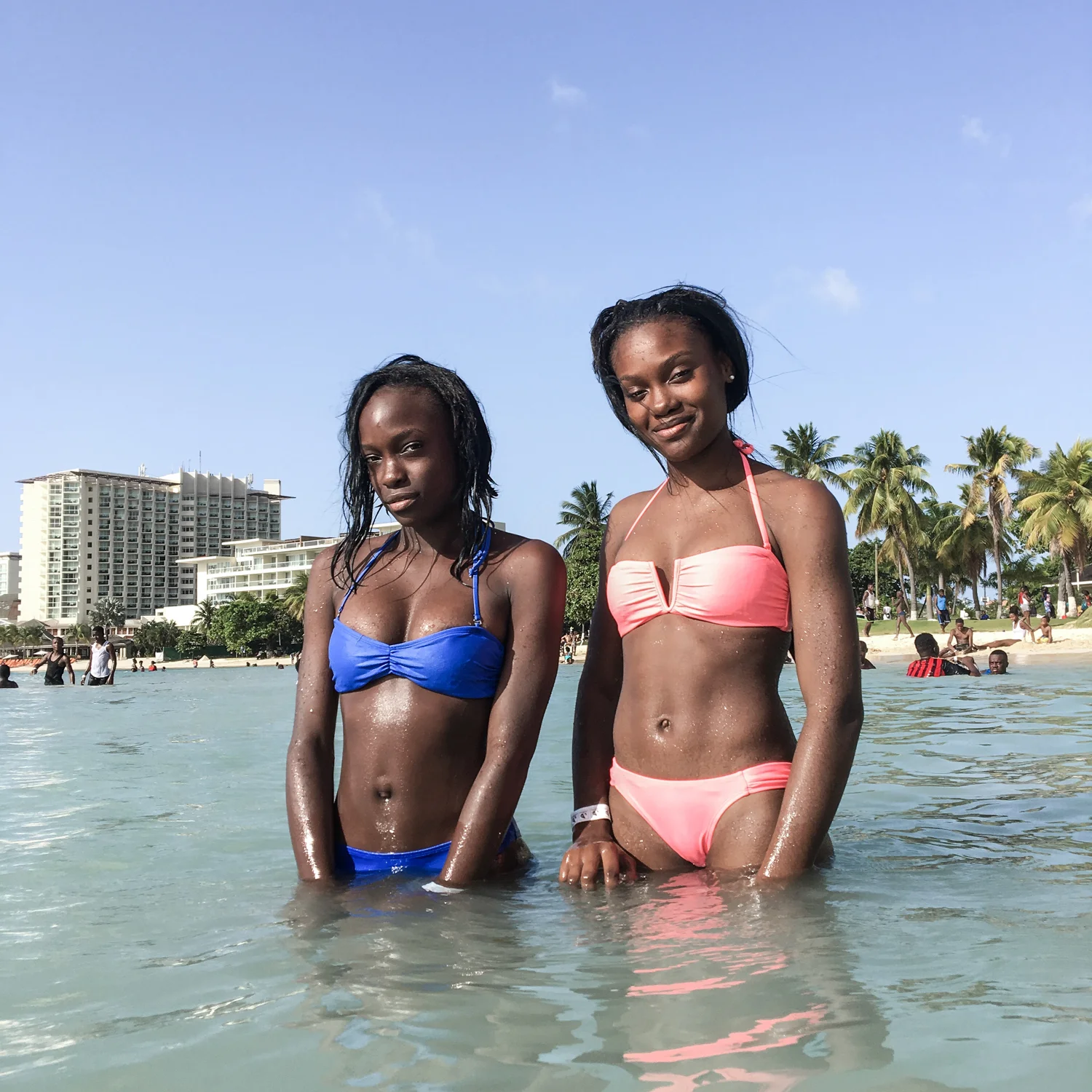
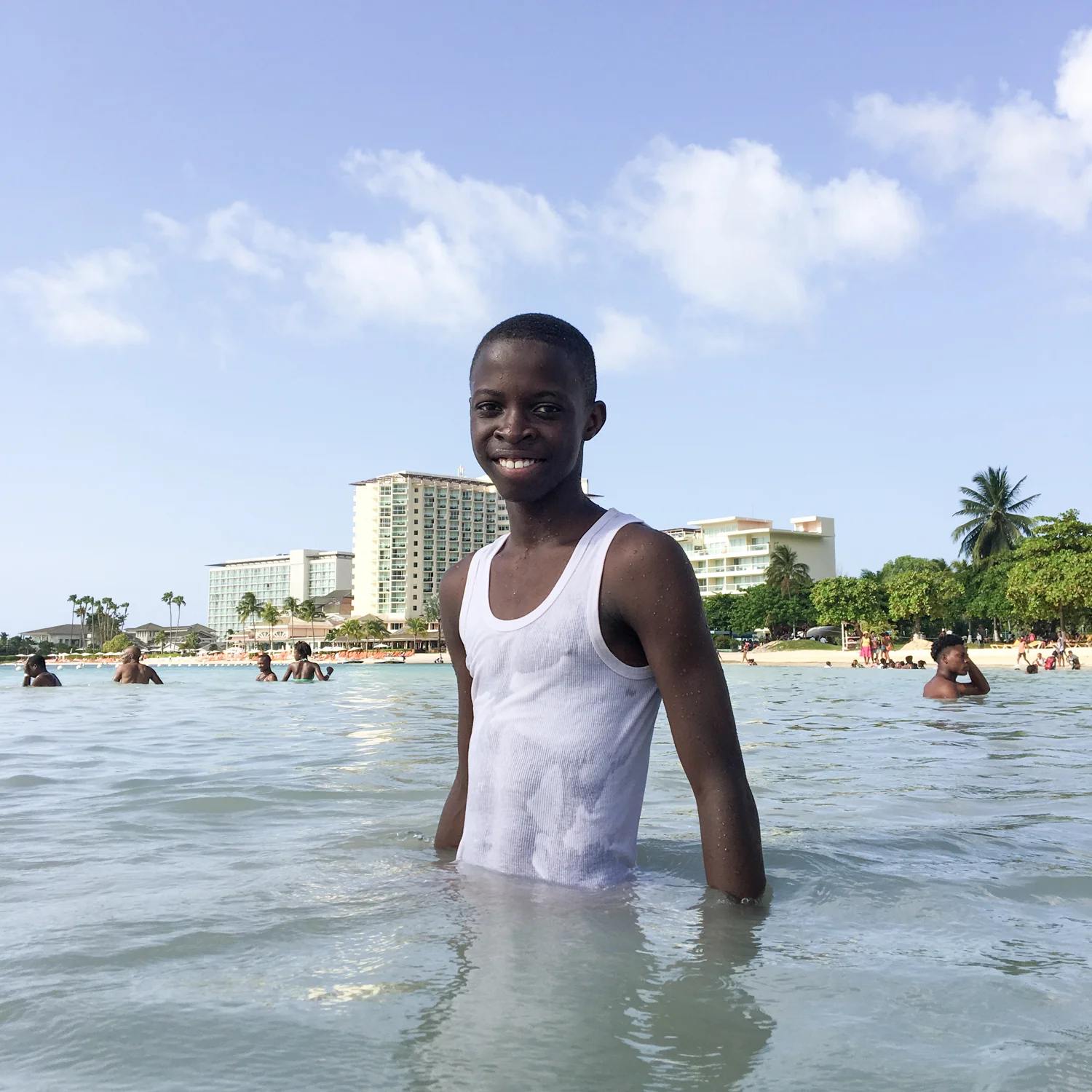
O presente ensaio fotográfico foi produzido em 2017, no primeiro dia do spring break - férias escolares de verão - em Ocho Rios. Também conhecida como Ochi, a cidade Jamaicana é marcada pela ostensiva presença da indústria turística, sua orla é privatizada e tomada por um porto de cruzeiros e diversos resorts all inclusive.
Com a privatização de quase todo o litoral jamaicano e a forte publicidade em torno da construção de um paraíso onde haveria apenas "mar, areia e sol", o que se constrói historicamente é uma visualidade excludente, onde os nativos são eliminados das imagens e apenas alguns turistas brancos ocupam a praia.
O spring break - férias de verão - altera as dinâmicas de uso dos espaços públicos da cidade, sobretudo das praias, cuja ocupação cotidiana no resto do ano é majoritariamente tomada pelo turismo, tensionando as barreiras impostas pela indústria turística ao contrariar o objetivo principal das políticas restritivas de uso da praia: eliminar a presença dos nativos.
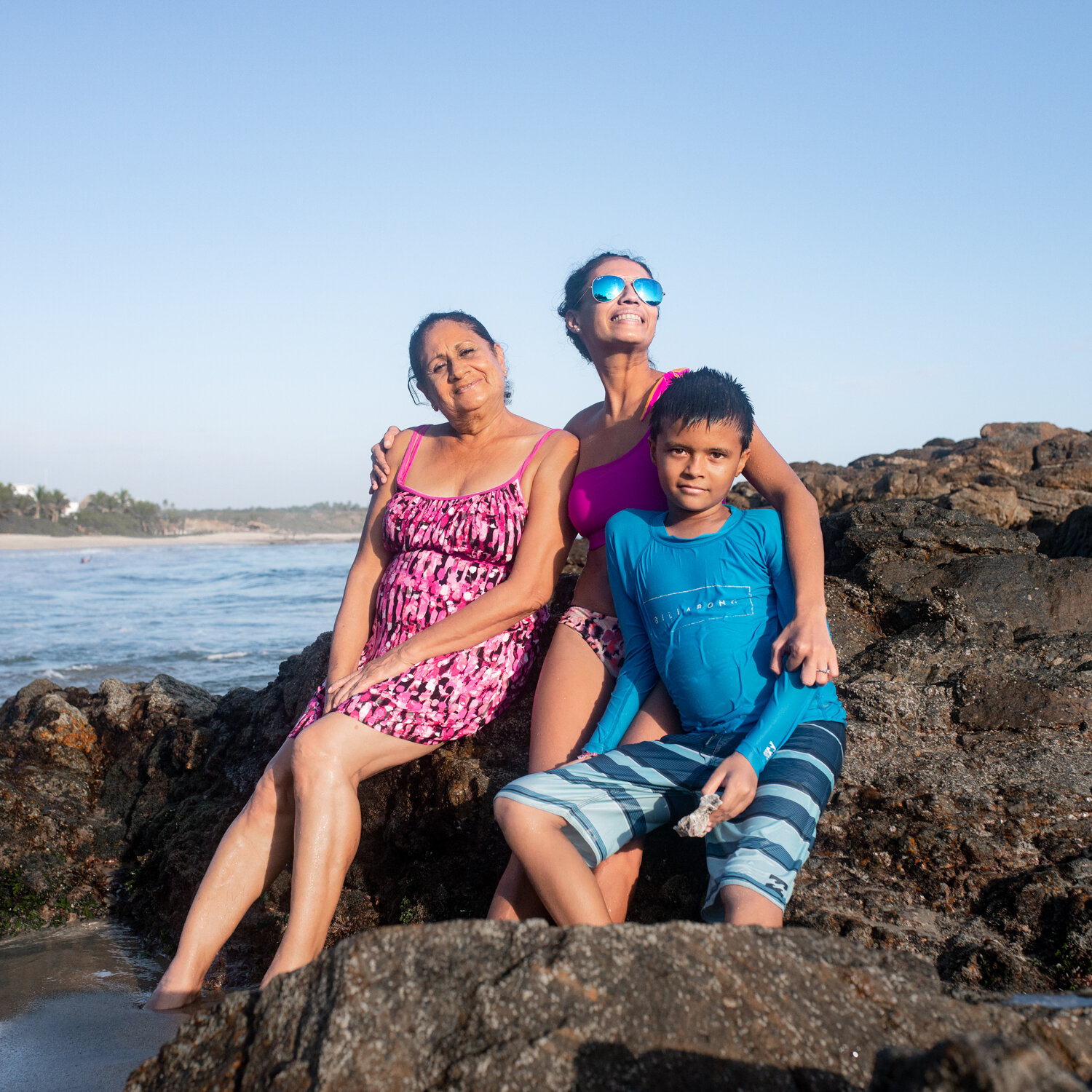
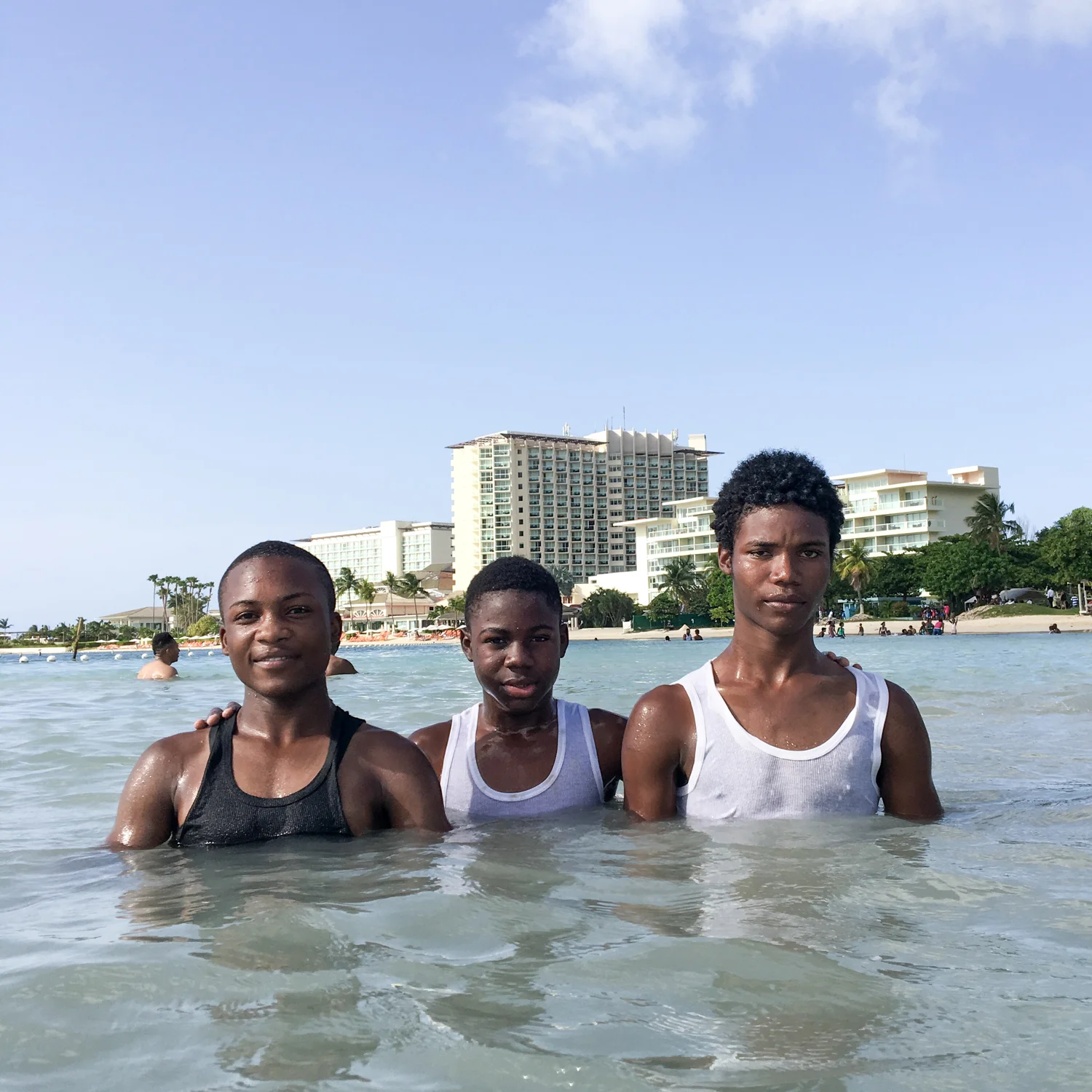
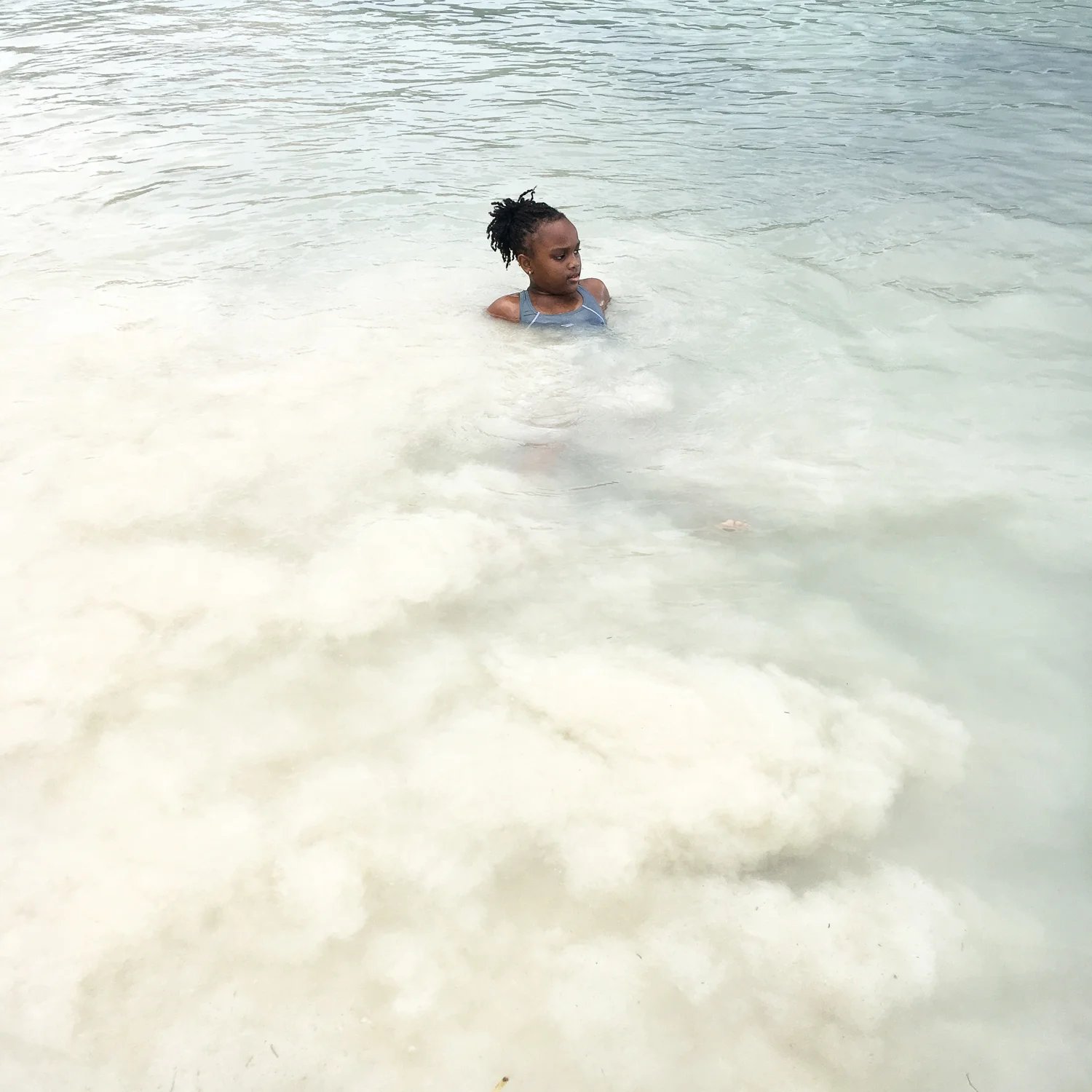
No ensaio apresentado a ordem visual é invertida e os nativos são apresentados como protagonistas das imagens: a praia ocupada por corpos negros, jamaicanos, autônomos, sem uniformes, sem as cores Rastafari, sem frutas tampando seus rostos, sem brancos no primeiro plano - o contrário do que se vê usualmente na construção visual jamaicana.
O que propõe aqui é a construção de um "espaço de aparição", pensando um regime de visibilidade atualizado e político, partindo de uma estética anti-fetichista, capaz de romper com estereótipos, e onde o direito de aparecer, se dê também como uma forma de resistir.
OCHI
This photo series took place on the first day of the 2017 spring break - summer school holidays - in Ocho Rios, a former fishing village located on the northern coast of Jamaica. With a population of 9,800 inhabitants, the city is Jamaica's second most tourist destination, receiving the largest flow of cruises along the entire coast. Ochi is marked by the ostensive presence of the tourist industry, a state and market partnership that privatized the coastal area introducing all inclusive five stars resorts that holds private stretches of beach for the exclusive use of the guests.
Throughout the last years the tourism industry tried to shape and represent the island as a “large resort”, where there is only "sun, sea and sand" and no natives. In this scenario, the bodies that are more commonly represented in the popular images of the country are those of white tourists enjoying natural beauties, while the black natives appear mainly as guides, waiters, fruits and tourist craft sellers or are eliminated from the images.
The spring break - summer school holidays - changes the dynamics of the use of public spaces in the Jamaican cities, especially the beach area, whose daily occupation during the rest of the year is mostly taken by tourism and its public. In this sense, the spring break can be considered as an event that stresses the barriers imposed by the tourist industry as it makes possible to counter the main objective of beach access restrictive control policies: to eliminate the presence of the natives.
What is proposed here is the construction of a "space of appearance", a regime of up-to-date and political visibility, starting from an anti-fetishistic aesthetic, capable of breaking with stereotypes, and where the right to appear, is also given as a way of resisting.